
Table of contents
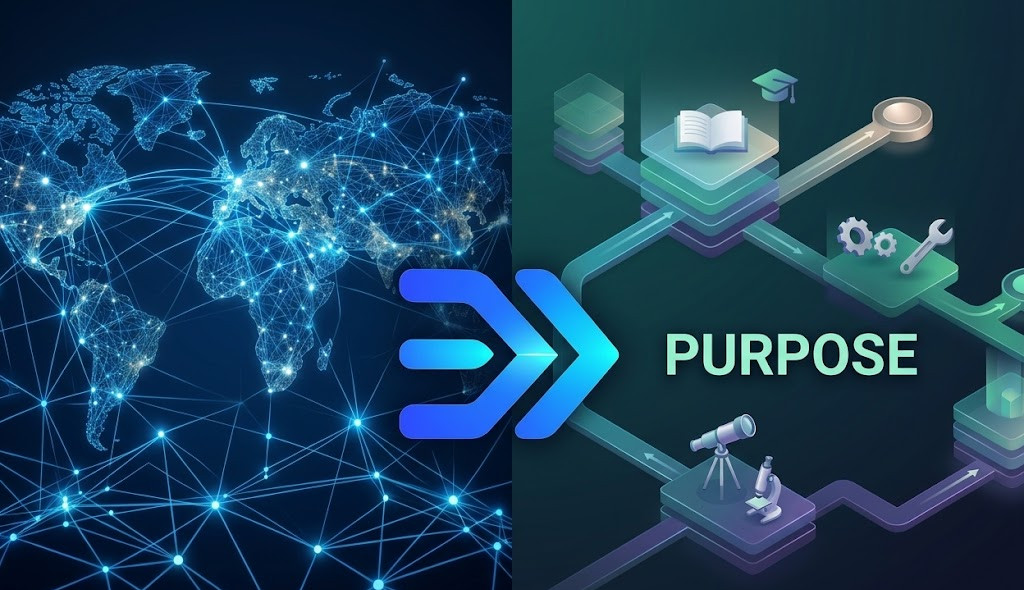
The Internet Solved Connectivity. The Next Challenge Is Purpose.
The internet is one of humanity's greatest achievements.
In just a few decades it connected billions of people, organizations, devices, services, and ideas. It transformed commerce, communication, education, research, and government. Entire industries emerged because connectivity became universally available.
For most of the internet's history, the challenge was clear.
Connect more people.
Connect more places.
Connect more systems.
Connect more information.
That mission was both necessary and successful.
But connectivity was never the final destination.
It was the foundation.
The Internet Became Infrastructure
Today digital access is no longer a convenience.
It is infrastructure.
Students rely on digital resources to learn.
Researchers rely on digital resources to discover.
Employees rely on digital resources to work.
Organizations rely on digital resources to operate.
When access disappears, learning slows, research stalls, productivity declines, and operations suffer.
Digital access now occupies the same category as electricity, transportation, and communications.
Yet despite this transformation, most organizations still manage access using models that were designed primarily for connectivity rather than outcomes.
The questions remain:
- Can this user connect?
- Is this destination allowed?
- Is this traffic permitted?
- Is this identity authenticated?
Important questions.
But increasingly, not the most important question.
Organizations Are Not General-Purpose Environments
The internet is a general-purpose network.
Organizations are not.
A school exists to educate.
A university exists to advance knowledge.
A research institute exists to discover.
A company exists to create value.
A public institution exists to serve citizens.
Each organization has different objectives.
Each objective requires different resources.
Each environment requires different forms of governance.
Yet digital access is often delivered as if every environment shares the same purpose.
The result is growing misalignment between what organizations are trying to achieve and the environments they provide.
More Access Is Not Always Better Access
For years the dominant assumption was simple.
More access creates more opportunity.
Sometimes that remains true.
But organizations increasingly face challenges that cannot be solved by expanding access alone.
Open environments often create:
- Distraction
- Policy sprawl
- Shadow IT
- Shadow AI
- Compliance challenges
- Support burden
- Governance complexity
The response has often been restriction.
Block more.
Filter more.
Approve more.
Control more.
Unfortunately excessive restriction creates a different set of problems.
- Frustration
- Exceptions
- Workarounds
- Delayed innovation
- Reduced flexibility
Organizations become trapped between two imperfect models.
The Open Internet.
Or the Restricted Internet.
We believe a third option is needed.
The Rise of AI Exposed the Problem
Artificial intelligence did not create this challenge.
It exposed it.
For years organizations could maintain lists of approved applications and websites.
The pace of change was manageable.
Today new AI platforms appear every week.
New research tools emerge constantly.
New educational resources appear daily.
New workplace technologies become essential overnight.
The question can no longer be:
"Should this website be blocked?"
The more important question is:
"Does this resource help achieve our objective?"
That shift is profound.
Because objectives are not technical concepts.
They are organizational concepts.
Purpose Is The Missing Layer
For decades digital access has been organized around destinations.
Domains.
Applications.
Networks.
Services.
These concepts remain important.
But people do not pursue domains.
They pursue outcomes.
Students pursue learning.
Researchers pursue discovery.
Employees pursue productivity.
Organizations pursue objectives.
Purpose has always existed.
The internet simply never treated it as a first-class design principle.
IntentNet begins there.
From Connectivity To Intent
IntentNet starts with a different question.
Not:
"Can this person connect?"
Not:
"Is this destination allowed?"
But:
"What is this person trying to accomplish?"
That question changes the design model completely.
Intent becomes the starting point.
The environment becomes the unit of access.
Resources become tools that support objectives.
Outcomes become the measure of success.
The model becomes:
Intent → Environment → Resources → Outcomes
This is the foundation of IntentNet.
Environments Matter
Human beings rarely succeed because they have access to everything.
They succeed because they operate within environments that support meaningful objectives.
Classrooms are environments.
Laboratories are environments.
Workplaces are environments.
Research centers are environments.
Digital environments deserve the same level of intentional design.
The future of access is not deciding what to block.
The future of access is designing environments that help people succeed.
Guiding Instead of Blocking
The digital world evolves continuously.
New resources appear.
New opportunities emerge.
New technologies arrive.
No policy can predict every future requirement.
Traditional systems provide two options.
Allow.
Or deny.
IntentNet introduces a third.
Request.
Review.
Learn.
Adapt.
This principle became Guided Access.
A framework that allows environments to evolve while remaining aligned with their purpose.
IntentNet Is A Foundation
IntentNet was never designed as a single product.
It was designed as a foundation.
A foundation for purpose-built digital environments.
EduNet applies IntentNet to learning.
WorkNet applies IntentNet to work.
Many future environments have yet to be imagined.
Research environments.
AI environments.
Operational environments.
Public service environments.
Industry-specific environments.
The foundation remains the same.
Purpose first.
What We Believe
We believe purpose matters.
We believe environments matter.
We believe outcomes matter.
We believe access should evolve.
We believe governance should enable progress rather than prevent it.
We believe privacy and visibility can coexist.
We believe alignment is more valuable than restriction.
We believe connectivity was the beginning, not the destination.
We believe digital access should follow purpose.
The Next Chapter
The first chapter of the internet was connectivity.
The next chapter will be intentional connectivity.
Not less access.
Better access.
Not more restrictions.
Better environments.
Not more destinations.
Clearer purpose.
The internet connected people to information.
IntentNet helps connect people to purpose.
That belief became IntentNet.
And IntentNet became Myxify.
Research & Strategy
Why IntentNet Is Emerging Now, Not Ten Years Ago
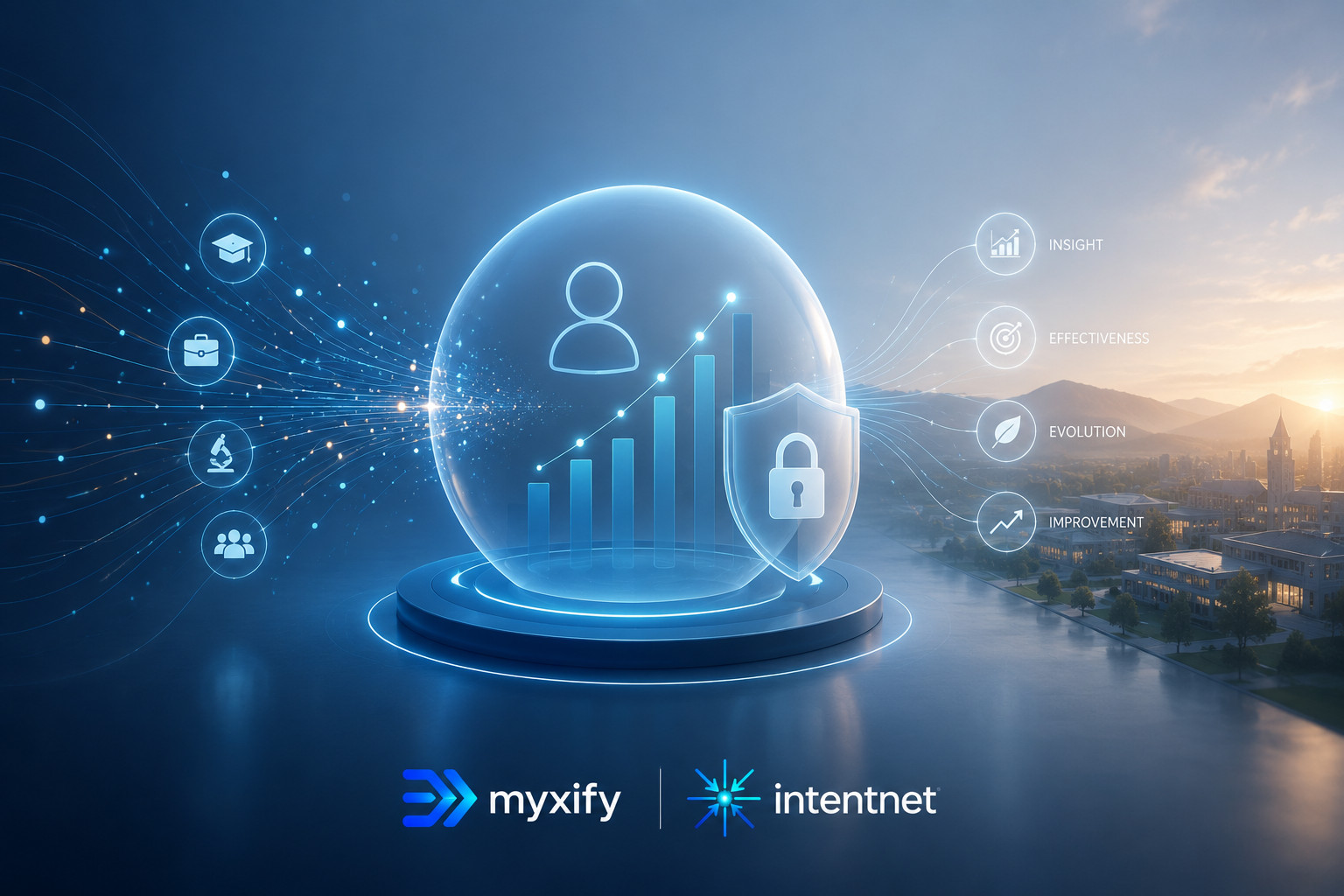
The idea behind IntentNet is not new. What is new is the environment around us. AI, cloud services, remote work, and accelerating digital complexity have made purpose-driven access increasingly necessary.
Why IntentNet Is Emerging Now, Not Ten Years Ago
A reasonable question often arises when people first encounter IntentNet.
If aligning digital access with organizational purpose is such an important idea, why is it emerging now?
Why not ten years ago?
Why not twenty?
After all, schools have always had educational objectives. Businesses have always pursued productivity. Research institutions have always focused on discovery. Governments have always been responsible for public services.
The underlying need for purpose has not changed.
What has changed is the digital environment surrounding those objectives.
The technologies, resources, workflows, and organizational dependencies that define modern digital life look fundamentally different than they did a decade ago.
IntentNet is not emerging because connectivity failed.
It is emerging because connectivity succeeded so completely that organizations are now confronting a new challenge.
How should digital environments be organized once connectivity is no longer the primary problem?
The first generation of digital infrastructure focused on connecting people. The next generation increasingly focuses on helping people achieve outcomes.
The Internet Solved Its Original Problem
For much of the internet's history, the dominant challenge was access itself.
Organizations sought to connect more people, more locations, more systems, and more information.
Schools were becoming digital.
Businesses were moving online.
Universities were expanding access to digital resources.
Governments were digitizing services.
Infrastructure investments focused on bandwidth, availability, connectivity, and reach.
These efforts were enormously successful.
Today, internet access is embedded into nearly every aspect of modern life.
For most organizations, connectivity is no longer a differentiator.
It is an expectation.
The strategic question is no longer whether people can connect.
The strategic question is what happens after they connect.
Digital Access Became Mission Critical
A decade ago, losing internet access was often an inconvenience.
Today it can disrupt core organizational functions.
Universities depend on learning management systems, digital libraries, research platforms, and collaboration tools.
Businesses depend on cloud applications, SaaS platforms, AI assistants, customer systems, and operational dashboards.
Research organizations depend on databases, computational resources, collaboration networks, and scientific repositories.
When access disappears, organizational performance often suffers immediately.
This shift transformed access from a utility into operational infrastructure.
As infrastructure becomes more important, questions about how it is designed become more important as well.
The SaaS Revolution Changed The Nature Of Access
One of the most significant developments of the last fifteen years has been the rise of cloud-based software.
Organizations once managed relatively small collections of applications.
Today many organizations depend on hundreds of external services.
Examples include:
- Collaboration platforms
- Project management systems
- Development environments
- Learning platforms
- Research databases
- Customer engagement tools
- Knowledge management systems
- AI assistants
The challenge is no longer gaining access to technology.
The challenge is managing abundance.
When resources become nearly unlimited, organizations need better ways to determine which resources support their objectives.
The question shifts from access to alignment.
Remote Work Redefined Organizational Boundaries
Traditional access models evolved during an era of relatively predictable environments.
Employees worked primarily from offices.
Students learned primarily on campus.
Applications often resided within organizational networks.
Security perimeters were easier to define.
Remote work fundamentally changed these assumptions.
Today people work from homes, campuses, co-working spaces, customer sites, research facilities, and mobile devices.
Applications are distributed.
Teams are distributed.
Resources are distributed.
Organizations increasingly operate without clear physical boundaries.
This shift exposed limitations in access models originally designed for centralized environments.
Artificial Intelligence Accelerated Everything
Artificial intelligence did not create the need for IntentNet.
It accelerated it.
For many years organizations could maintain relatively stable lists of approved applications and resources.
The pace of technological change was manageable.
AI changed the equation.
New models appear continuously.
New AI platforms emerge every month.
New capabilities rapidly become part of learning, research, software development, knowledge work, and operations.
Organizations now face questions that traditional access models struggle to answer.
- Which AI systems should be approved?
- Which models can process organizational information?
- How should new capabilities be evaluated?
- How should environments evolve?
The challenge is no longer managing a static environment.
The challenge is governing continuous change.
The Limits Of Binary Thinking
Many traditional access systems were designed around binary decisions.
Allow.
Or deny.
This model worked reasonably well when environments changed slowly.
Modern environments change rapidly.
Organizations increasingly discover that unrestricted openness and excessive restriction both create problems.
Open environments may create:
- Shadow IT
- Shadow AI
- Governance complexity
- Inconsistent technology adoption
- Operational risk
Highly restrictive environments may create:
- Frustration
- Workarounds
- Innovation bottlenecks
- Reduced flexibility
- Delayed adoption of valuable tools
Neither model fully addresses modern organizational realities.
The challenge is no longer choosing between openness and restriction.
The challenge is creating environments that remain aligned with purpose while adapting to change.
Access Decisions Became Strategic Decisions
Historically, many access decisions were treated primarily as technical concerns.
Today those same decisions increasingly influence strategic outcomes.
Access affects:
- Learning effectiveness
- Research productivity
- AI adoption
- Innovation capacity
- Workforce performance
- Regulatory compliance
- Organizational competitiveness
These are not merely operational concerns.
They are strategic concerns.
As a result, access itself is becoming a strategic capability.
Organizations are beginning to recognize that decisions about digital environments influence outcomes far beyond technology.
Organizations Need Better Environments
The conversation is gradually moving away from individual websites, applications, and destinations.
A broader question is emerging.
What kind of environment helps people achieve their objectives?
Students need environments that support learning.
Researchers need environments that support discovery.
Employees need environments that support productive work.
Organizations need environments that reflect their goals, governance requirements, and operational priorities.
The environment becomes more important than any individual resource contained within it.
Why This Moment Matters
IntentNet is not emerging because of a single technology.
It is emerging because multiple long-term trends have converged.
- Digital transformation
- Cloud adoption
- SaaS expansion
- Remote work
- Research digitization
- Artificial intelligence
- Growing governance requirements
Together these trends expose a simple reality.
Organizations need more than connectivity.
They need environments intentionally designed around outcomes.
That need was far less visible ten years ago.
Today it is becoming increasingly difficult to ignore.
Looking Ahead
The first generation of internet infrastructure focused on connection.
The next generation will increasingly focus on alignment.
Alignment between people and objectives.
Alignment between resources and outcomes.
Alignment between governance and innovation.
Alignment between technology and purpose.
That is why IntentNet is emerging now.
Not because the underlying idea is new.
Because the conditions that make the idea necessary have finally arrived.
Continue The Reading Journey
If purpose is becoming more important than connectivity alone, the next step is understanding the foundation behind purpose-built digital environments.
Research & Strategy
Access Is Becoming Strategic Infrastructure
Organizations spent decades treating digital access as a technical function. Increasingly, access influences learning, productivity, research, innovation, AI adoption, and competitiveness. That makes access a strategic concern.

Access Is Becoming Strategic Infrastructure
For most of the internet era, digital access was treated primarily as a technical function.
Organizations invested in networks, internet connectivity, security controls, and identity systems to ensure that people could reliably reach the resources they needed. Access was important, but it was rarely viewed as a strategic capability.
When access worked, it received little attention.
When access failed, it became an operational problem for IT teams to resolve.
That model reflected a world where digital systems supported business activities.
Today digital systems increasingly define business activities.
Learning, research, collaboration, innovation, customer engagement, operational management, and artificial intelligence all depend on digital resources. As a result, access now influences outcomes that extend far beyond technology.
Organizations are gradually discovering that access is no longer simply an operational service.
It is becoming strategic infrastructure.
When digital access directly influences learning, innovation, productivity, research, and competitiveness, access becomes a strategic capability rather than a technical utility.
Infrastructure Evolves In Importance
History provides many examples of infrastructure becoming strategically significant.
Electricity was once viewed as a technical service.
Transportation networks were once viewed primarily as logistical systems.
Telecommunications were once considered operational support functions.
Over time, organizations recognized that these capabilities influenced growth, competitiveness, efficiency, and long-term success.
Digital access is undergoing a similar transition.
The resources available to employees, students, researchers, and organizations increasingly shape what those individuals can accomplish.
As digital environments become more important, the systems that govern access to those environments become more strategically relevant.
The Invisible Foundation Of Modern Organizations
One of the defining characteristics of successful infrastructure is that it often becomes invisible.
People rarely think about electricity while using a computer.
They rarely think about transportation systems while receiving deliveries.
Similarly, people rarely think about digital access while performing everyday work.
Employees focus on projects.
Researchers focus on discovery.
Students focus on learning.
Organizations focus on outcomes.
Yet beneath each of these activities lies a complex network of digital resources, applications, platforms, services, and information systems.
Without access to those resources, many modern organizations would struggle to function.
This dependency has transformed access from a convenience into a foundational capability.
The Shift From Connectivity To Outcomes
Historically, access strategies focused on connectivity.
Questions often included:
- Is the network available?
- Is the application reachable?
- Is the user authenticated?
- Is the connection secure?
These remain important operational concerns.
However, organizations increasingly face a different category of question.
- Which AI systems should employees use?
- Which research resources should be available?
- Which educational platforms support learning outcomes?
- Which digital environments improve productivity?
- Which technologies support strategic objectives?
These are not purely technical questions.
They are organizational questions.
They require decisions about priorities, governance, objectives, and long-term direction.
The conversation therefore moves beyond connectivity and toward outcomes.
Every Strategic Objective Depends On Access
Consider how different organizations create value.
Universities create value through learning and research.
Technology companies create value through innovation and collaboration.
Research institutions create value through discovery.
Public-sector organizations create value through service delivery.
Every one of these activities depends on digital resources.
Researchers require journals, databases, and computational platforms.
Students require educational resources, learning systems, and increasingly AI-assisted tools.
Employees require collaboration platforms, cloud services, operational systems, and productivity technologies.
Access sits between people and the resources they depend upon.
As a result, access directly influences organizational performance.
The Hidden Costs Of Poor Access Design
Organizations often evaluate digital infrastructure through availability metrics.
Uptime.
Latency.
Capacity.
Reliability.
These indicators are important, but they reveal only part of the picture.
Poorly designed access environments frequently create costs that never appear on operational dashboards.
Examples include:
- Reduced productivity
- Shadow IT
- Shadow AI
- Approval bottlenecks
- Tool duplication
- User frustration
- Delayed innovation
- Governance complexity
- Inconsistent technology adoption
These costs rarely appear as outages.
Yet they can significantly influence organizational outcomes.
Most organizations can measure downtime. Far fewer can accurately measure the cost of friction, workarounds, shadow AI, or delayed innovation.
AI Accelerated The Conversation
Artificial intelligence accelerated a shift that was already underway.
Executives suddenly found themselves making decisions that directly affected competitiveness, workforce effectiveness, and organizational capability.
Questions emerged rapidly.
- Which AI systems should be approved?
- Which models may process sensitive information?
- How should AI adoption be governed?
- How can organizations balance innovation with accountability?
These decisions rarely remain confined to IT departments.
Executive leadership becomes involved.
Legal teams become involved.
Compliance teams become involved.
Academic leadership becomes involved.
Business units become involved.
AI revealed something important.
Access decisions increasingly influence strategic outcomes.
Access Shapes Organizational Behavior
Digital environments influence behavior.
The tools people encounter influence the tools they adopt.
The resources available influence the methods they use.
The environment influences how work is performed, how research is conducted, and how learning occurs.
This effect is often subtle.
Yet over time it becomes significant.
Organizations are increasingly recognizing that access design is not neutral.
Every environment encourages some behaviors while discouraging others.
The critical question becomes whether those behaviors align with organizational objectives.

The Strategic Infrastructure Test
One useful way to identify strategic infrastructure is to ask a simple question.
If this capability disappeared tomorrow, would organizational performance suffer?
For most organizations, the answer is obvious.
Without access:
- Learning slows
- Research stalls
- Collaboration weakens
- Innovation declines
- Operations become disrupted
- AI adoption becomes impossible
This dependence is precisely what makes access strategically important.
Infrastructure becomes strategic when organizational outcomes depend on it.
Beyond Connectivity
The next generation of access strategy will extend beyond connectivity.
Organizations increasingly require:
- Alignment
- Governance
- Visibility
- Adaptability
- Accountability
- Outcome-focused design
The objective is no longer simply connecting people.
The objective is helping people achieve meaningful outcomes.
This shift changes how organizations evaluate digital environments, governance models, AI adoption, and resource management.
The Next Generation Of Infrastructure
The first generation of digital infrastructure focused on availability.
The second generation focused on security.
The next generation will increasingly focus on outcomes.
Organizations will evaluate digital environments not only by whether they function, but by whether they contribute to learning, productivity, innovation, research, and organizational success.
Infrastructure will increasingly be judged by its ability to support objectives.
Not merely by its technical performance.
This represents one of the most important shifts currently occurring in digital strategy.
Why This Matters
Organizations invest heavily in learning, research, operations, digital transformation, innovation, and artificial intelligence.
All of these investments depend on access.
Treating access solely as a technical concern increasingly understates its importance.
Access influences what people can discover.
What they can learn.
What they can build.
What they can automate.
What they can achieve.
That is why access is becoming strategic infrastructure.
And why organizations that recognize this shift early may gain advantages that extend far beyond technology.
Continue The Reading Journey
If access is becoming strategic infrastructure, the next question is how organizations should design environments around strategic objectives. Explore IntentNet and purpose-built digital environments.
IntentNet
What Is IntentNet?
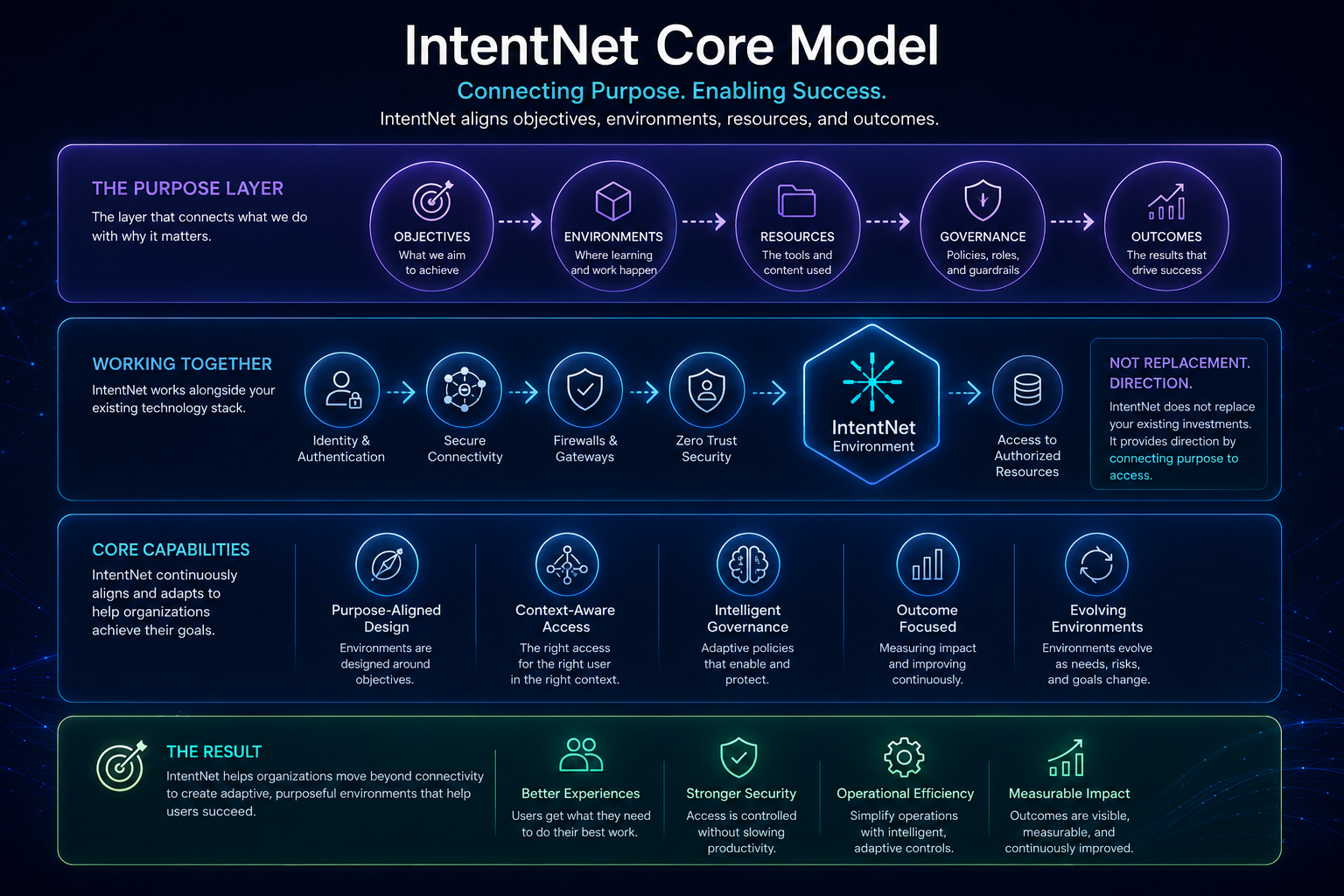
IntentNet is a foundation for creating purpose-built digital environments. Instead of organizing access around destinations and networks, IntentNet organizes access around intent, environments, resources, and outcomes.
What Is IntentNet?
After discussing why digital access is changing, a natural question follows.
What exactly is IntentNet?
The simplest answer is this:
IntentNet is a foundation for creating purpose-built digital environments.
It helps organizations align digital access with what people are trying to accomplish.
That explanation is simple.
The implications are not.
IntentNet helps organizations design digital environments around purpose rather than simply managing connectivity.
Starting With The Wrong Question
Most access technologies begin with technical questions.
Examples include:
- Who is the user?
- Is the user authenticated?
- Is the destination allowed?
- Is the connection secure?
- Does policy permit the request?
These are valid questions.
Every modern organization needs answers to them.
But they share a common assumption.
They treat access primarily as a connectivity problem.
IntentNet starts somewhere else.
Before asking whether a connection should occur, IntentNet asks:
What is the person trying to accomplish?
That single question changes the design model.
The Core Idea
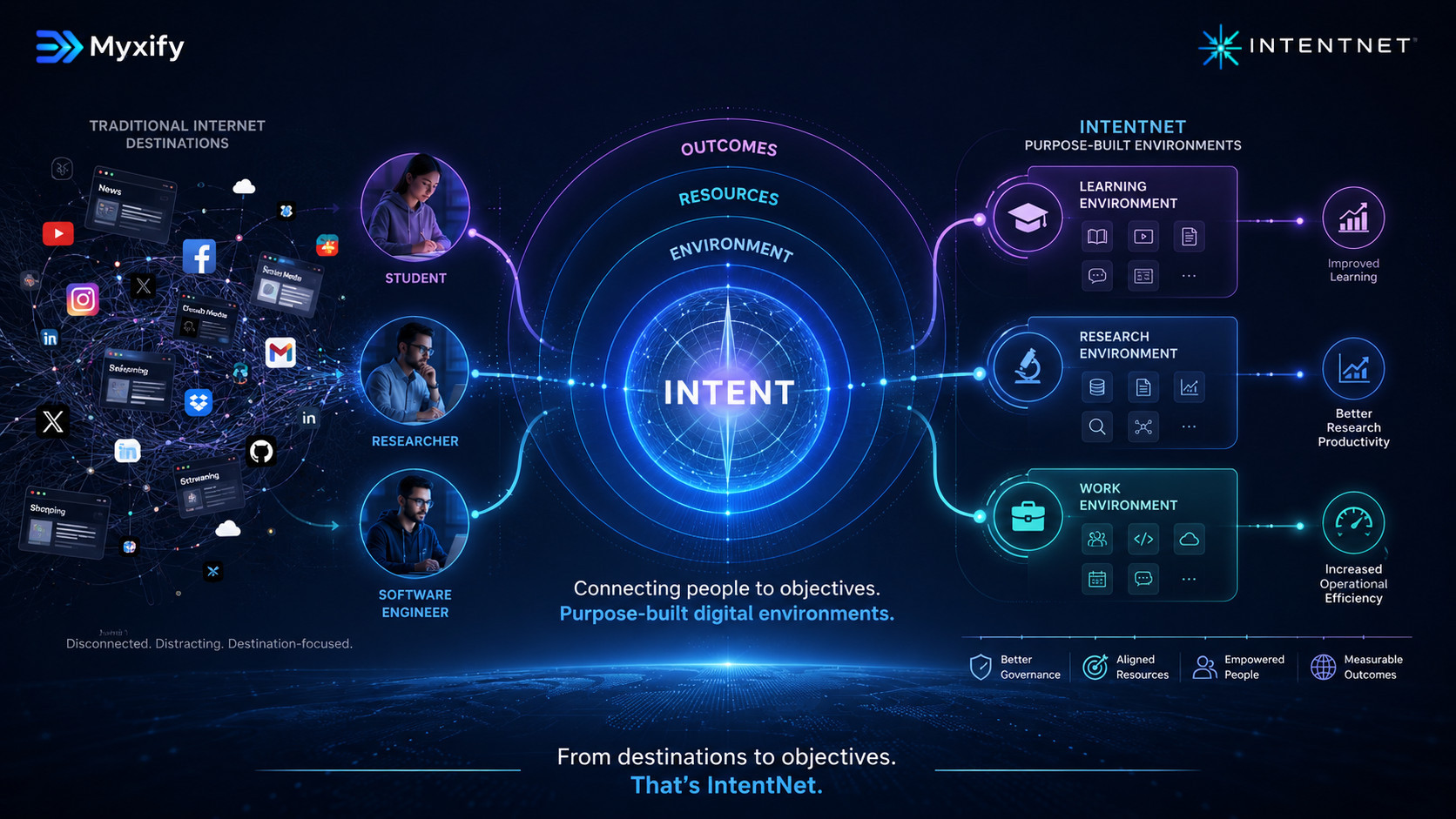
Imagine three people.
A student.
A researcher.
A software engineer.
All three may use the internet.
All three may use AI systems.
All three may use cloud services.
Yet their objectives are completely different.
The student wants to learn.
The researcher wants to discover.
The engineer wants to build.
Traditional access systems often treat these individuals similarly.
IntentNet does not.
IntentNet treats purpose as a first-class design principle.
The IntentNet Model
IntentNet organizes digital access around four connected elements.
Intent
What is the person or organization trying to accomplish?
Examples:
- Learning
- Research
- Work
- Operations
- Collaboration
- Innovation
Intent provides direction.
Environment
An environment is a digital space designed around an objective.
Examples include:
- Learning environments
- Research environments
- Work environments
- Operational environments
The environment becomes the primary unit of design.
Resources
Resources are the services, platforms, applications, tools, and destinations that support the environment.
A resource belongs inside an environment because it helps achieve the objective.
Not simply because it exists.
Outcomes
Outcomes explain why the environment exists.
Examples may include:
- Improved learning
- Better research productivity
- Increased operational efficiency
- Faster innovation
- Better governance
Outcomes are the ultimate measure of success.
Environments Instead Of Destinations
One of the easiest ways to understand IntentNet is to compare two different approaches.
Traditional thinking often asks:
Is this website allowed?
IntentNet asks:
Does this resource belong inside the intended environment?
At first glance the difference appears small.
In practice it is significant.
The first question focuses on destinations.
The second focuses on purpose.
Purpose provides context.
Context improves decision making.
Traditional systems manage destinations. IntentNet manages environments.
A Learning Example
Consider a university.
Traditional approaches might focus on lists of approved websites, categories, and policies.
IntentNet begins with the learning objective.
The environment is designed to support students and educators.
Resources are selected because they contribute to learning.
When new resources become valuable, the environment can evolve.
The objective remains constant.
Learning.
The environment adapts around that objective.

A Work Example
Now consider a modern organization.
Employees rely on collaboration platforms, cloud services, development tools, AI assistants, operational systems, and external resources.
The challenge is not merely deciding what should be blocked.
The challenge is creating an environment that supports productive work.
IntentNet allows organizations to design environments around work objectives rather than individual destinations.
The emphasis shifts from restriction to alignment.

Why IntentNet Is Not A Product Category
People often try to compare IntentNet with existing technologies.
Questions frequently include:
- Is it a VPN?
- Is it a proxy?
- Is it Zero Trust?
- Is it a firewall?
- Is it a filtering platform?
The answer is no.
IntentNet is not attempting to replace those technologies.
Those technologies solve important problems.
Identity.
Connectivity.
Security.
Inspection.
Policy enforcement.
IntentNet operates at a different level.
It helps define why environments exist and how they should evolve.
Existing technologies can participate inside an IntentNet architecture.
IntentNet gives them direction.
[RELATED_ARTICLES:title=Read Next|items=intentnet-is-not-a-vpn-firewall-proxy-or-zero-trust,how-intentnet-works]
A Foundation, Not A Single Environment
IntentNet was never designed for a single product.
It was designed as a foundation.
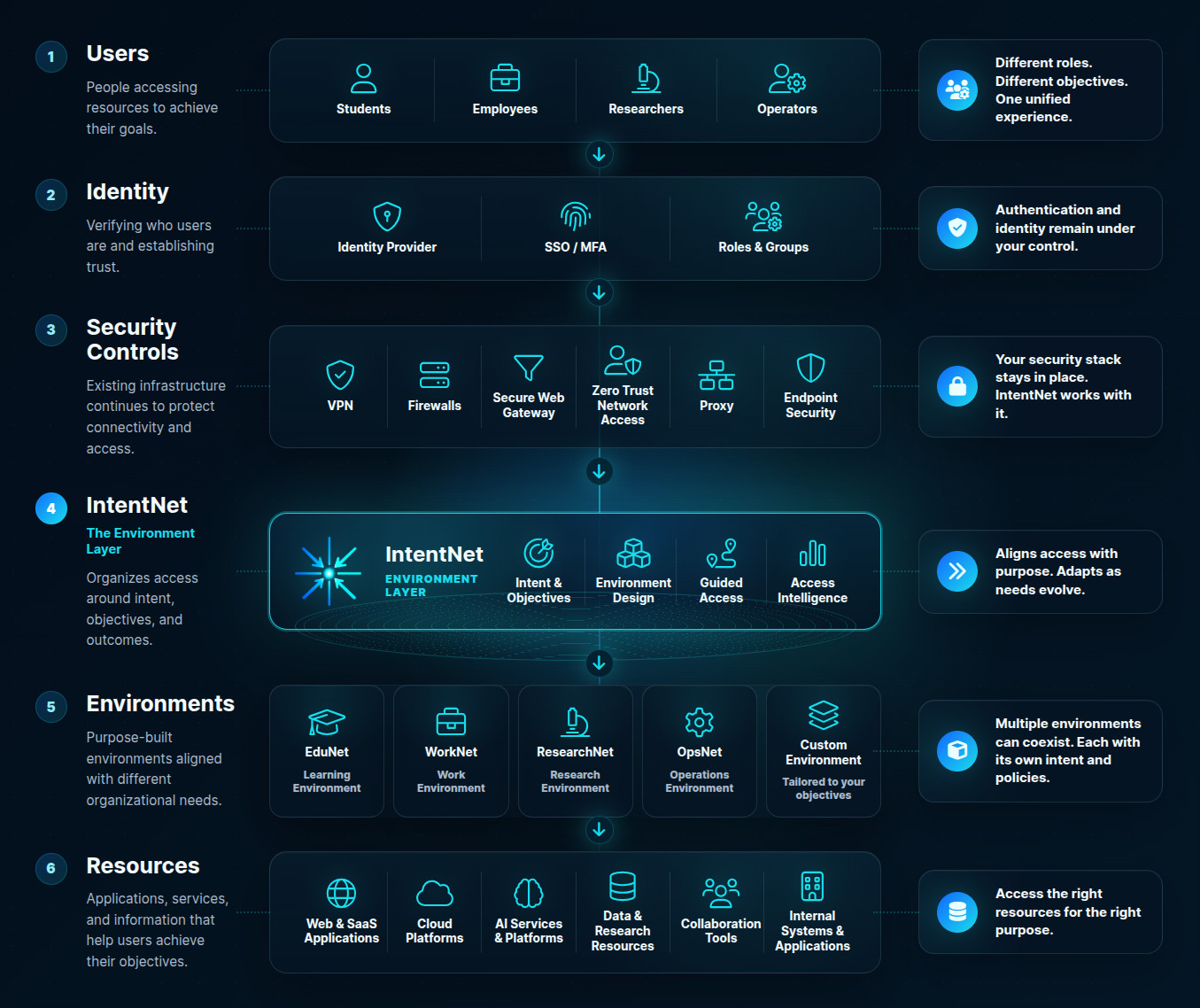
Today that foundation powers:
EduNet
Purpose-built learning environments.
WorkNet
Purpose-built work environments.
Tomorrow it may support:
- Research environments
- AI ecosystems
- Public service environments
- Industry-specific platforms
- Operational environments
- New categories that do not yet exist
The environments may change.
The foundation remains the same.
Why The Concept Matters
The internet connected people to information.
IntentNet helps organizations connect people to objectives.
That shift may sound subtle.
But it changes how environments are designed.
How governance evolves.
How resources are selected.
How outcomes are measured.
And ultimately how organizations think about digital access.
The One-Sentence Definition
If you remember only one thing from this article, remember this:
IntentNet is a foundation for creating purpose-built digital environments aligned with organizational objectives, resources, governance, and outcomes.
Continue The Journey
Now that you understand the model, the next step is understanding how IntentNet actually works in practice.
Architecture
How IntentNet Works
IntentNet starts with purpose, creates environments around objectives, supports Guided Access, learns through Access Intelligence, and continuously evolves. Here's how the model works in practice.
How IntentNet Works
By now we've explored why IntentNet exists and what it is.
The next question is practical.
How does IntentNet actually work?
The answer begins with a shift in perspective.
Traditional systems focus on destinations.
IntentNet focuses on purpose.
Everything else follows from that decision.
Traditional Access Starts With Connections
Most digital access systems follow a familiar path.
User
→ Identity
→ Network
→ Internet
→ Destination
→ Policy Decision
The system evaluates:
- Who the user is
- Which device they use
- Where they are located
- Which destination they are trying to reach
- Whether policy permits the request
This model works well when connectivity is the primary objective.
IntentNet addresses a different challenge.
Traditional systems optimize connections.
IntentNet optimizes environments.
IntentNet Starts With Purpose
Before discussing websites, applications, domains, or services, IntentNet asks a more fundamental question.
What is this person trying to accomplish?
Examples include:
- Learning
- Research
- Productive work
- Collaboration
- Operations
- Innovation
Purpose becomes the foundation for every decision that follows.
The IntentNet Lifecycle
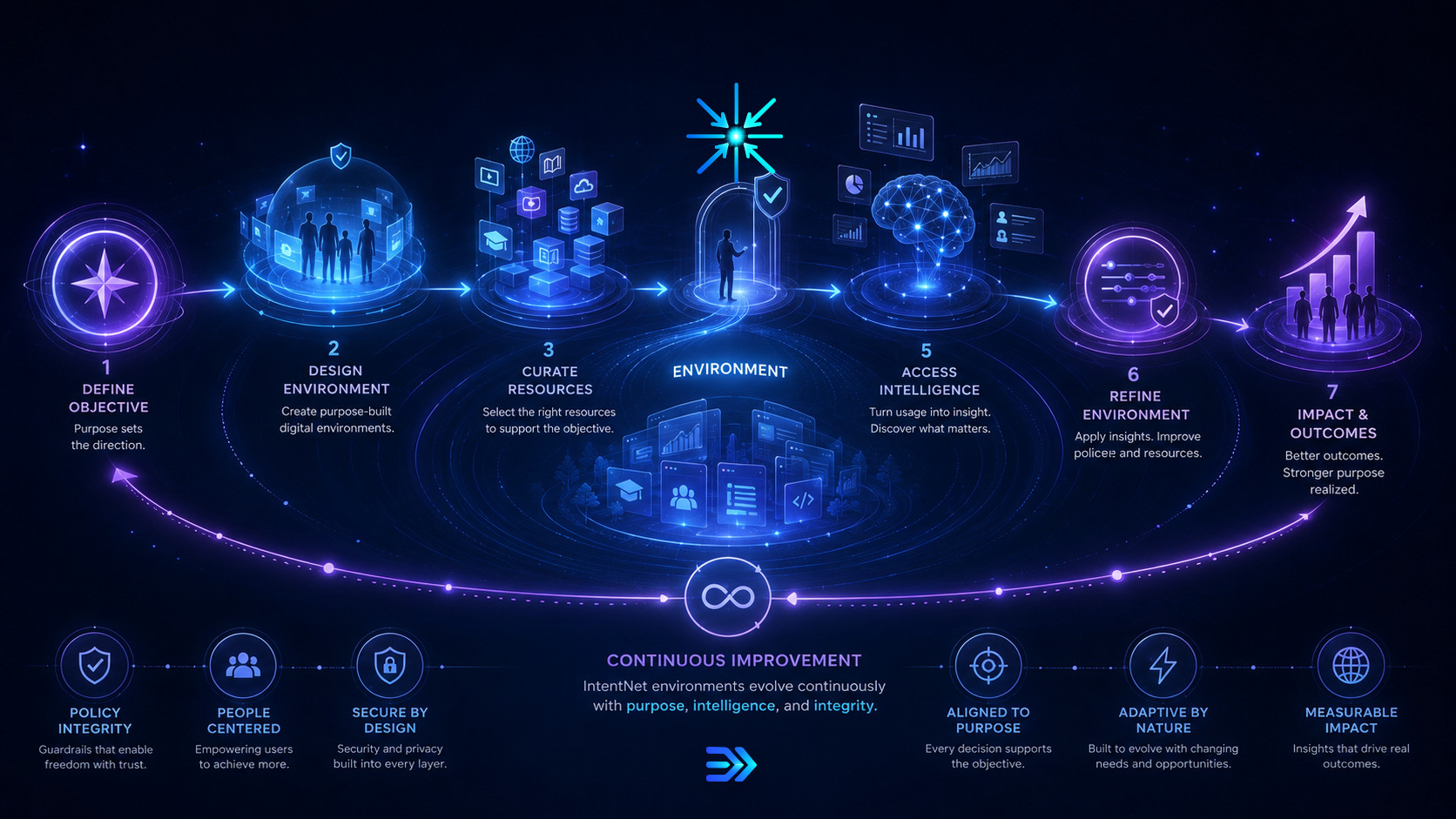
Everything in IntentNet can be understood through a simple lifecycle.

Intent
↓
Environment Design
↓
Resources
↓
Usage
↓
Guided Access
↓
Access Intelligence
↓
Refinement
↓
Improved Outcomes
Unlike traditional access systems, the process does not end when a connection is approved.
The environment continuously evolves.
Step 1: Define The Objective
Every environment begins with an objective.
A university may prioritize learning.
A research institute may prioritize discovery.
A company may prioritize productive work.
A government agency may prioritize service delivery.
IntentNet treats these objectives as design requirements.
Without a clear objective, there is no meaningful environment.
Step 2: Design The Environment
Once the objective is understood, an environment can be created.
An environment is more than a collection of websites.
It is a digital space intentionally designed to support a specific outcome.
Examples include:
- Learning environments
- Research environments
- Work environments
- Operational environments
This is where IntentNet differs most from traditional filtering and policy systems.
The environment becomes the unit of design.
Step 3: Select Resources
Every environment contains resources.
These may include:
- Websites
- Applications
- SaaS platforms
- AI assistants
- Research databases
- Collaboration tools
- Internal systems
The question is not simply:
Is this resource safe?
The question becomes:
Does this resource support the purpose of the environment?
This shift changes how organizations think about access.
Step 4: Support Real Work
Once an environment is active, people begin using it.
Students learn.
Researchers discover.
Employees collaborate.
Teams deliver outcomes.
At this stage, existing technologies continue to play important roles.
Identity systems.
Security systems.
Firewalls.
Secure gateways.
Zero Trust architectures.
IntentNet does not replace them.
It provides direction.
Step 5: Guided Access Enables Evolution
No environment can predict every future need.
New AI tools appear.
New learning resources emerge.
New research platforms become valuable.
Traditional systems often force organizations into a binary choice.
Allow.
Or deny.
IntentNet introduces a third option.
Request.
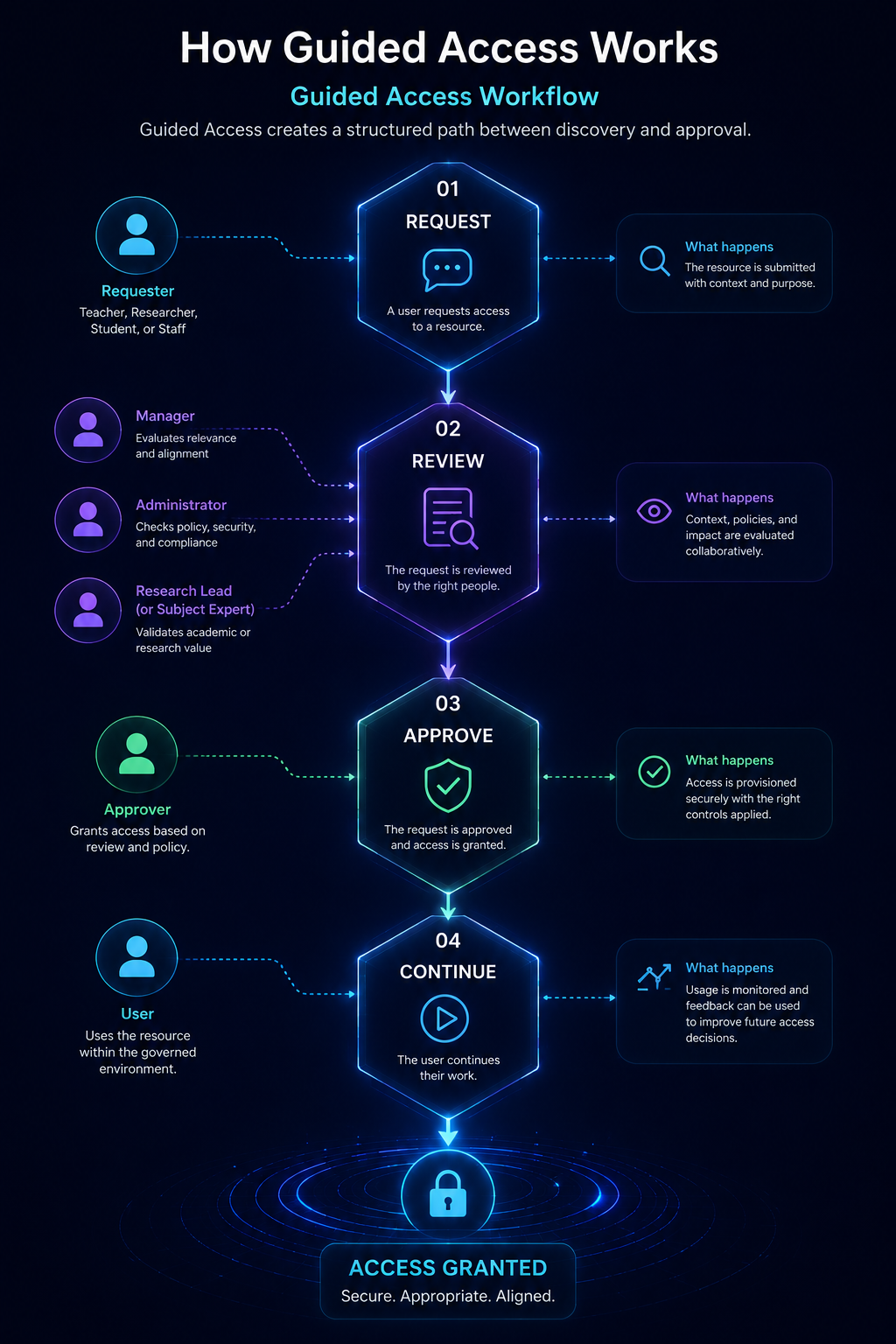
Request
↓
Review
↓
Approve
↓
Continue
This approach enables flexibility while maintaining governance.
Step 6: Access Intelligence Creates Understanding
Traditional visibility focuses heavily on activity.
Connections.
Traffic.
Sessions.
Bandwidth.
IntentNet asks different questions.
- Which resources are creating value?
- Which requests appear repeatedly?
- Which environments are successful?
- Which policies create friction?
- Where are opportunities emerging?
This layer is called Access Intelligence.
Its purpose is understanding.
Not surveillance.

Step 7: Refine The Environment
Every environment should improve over time.
Guided Access generates feedback.
Access Intelligence generates insight.
Environment Design applies both.
Organizations can:
- Add resources
- Remove resources
- Improve workflows
- Refine governance
- Reduce friction
- Improve outcomes
This refinement process never stops.
The Four Building Blocks
IntentNet is ultimately built around four interconnected ideas.
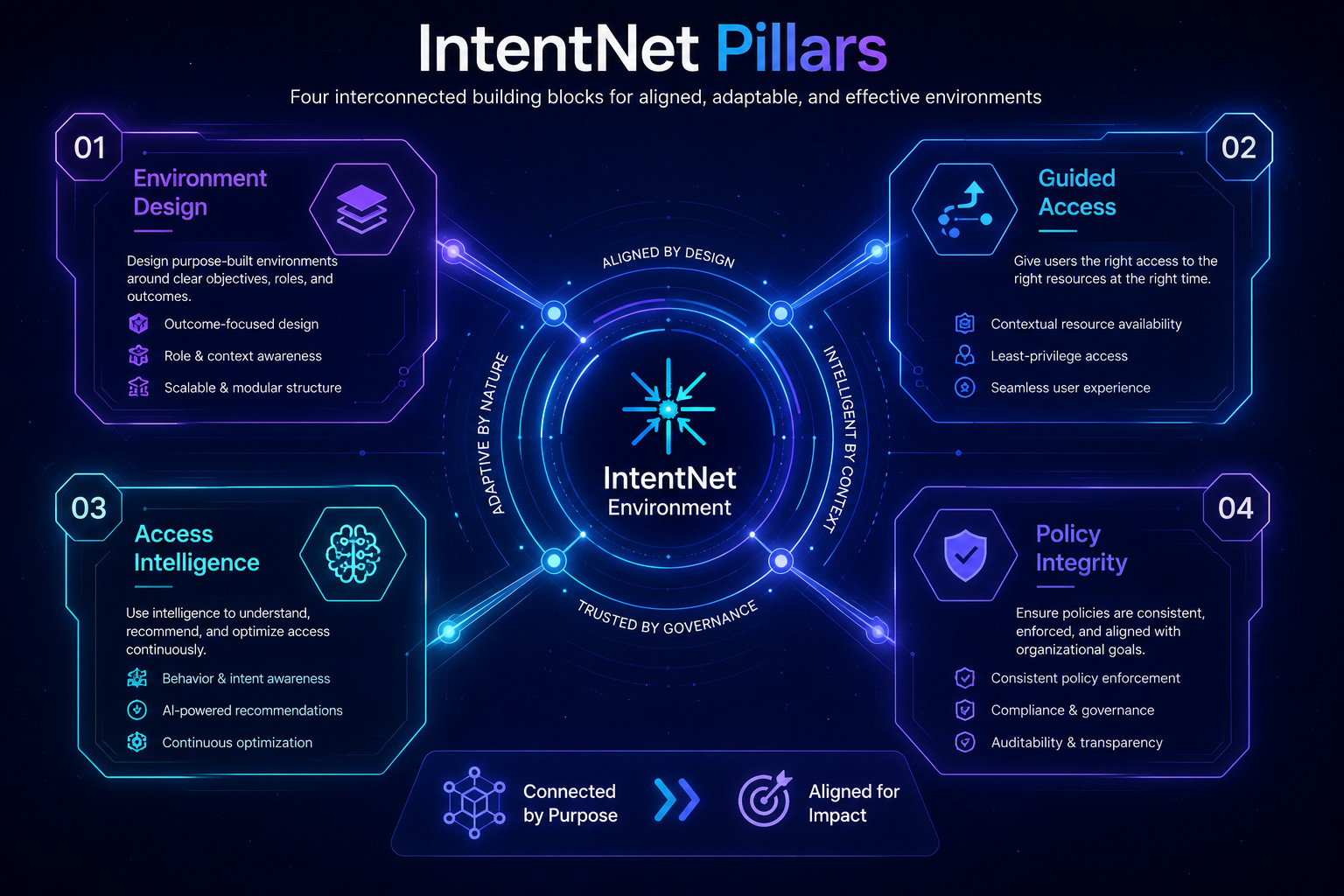
- Environment Design
- Guided Access
- Access Intelligence
- Policy Integrity
Together they create environments that can adapt without losing direction.
A University Example
Imagine a university deploying EduNet.
The objective is learning.
A learning environment is created.
Learning resources, AI tutors, coding platforms, digital libraries, academic journals, and collaboration tools become available.
Students use those resources.
Requests reveal emerging needs.
Faculty review and approve additions.
Access Intelligence identifies trends.
The environment improves.
The objective remains constant.
Learning.
The environment evolves around that objective.
The Simplest Explanation
IntentNet begins with purpose.
Designs environments around that purpose.
Allows those environments to evolve through Guided Access.
Learns through Access Intelligence.
Maintains alignment through Policy Integrity.
And continuously improves outcomes over time.
That is how IntentNet works.
Continue The Journey
Next, we'll explore why environment design begins with purpose and why environments are becoming more important than destinations.
READING JOURNEY
Continue Reading
Why IntentNet Is Emerging Now, Not Ten Years Ago
Continue ReadingRELATED ARTICLES
Keep exploring the knowledge hub.
Research & StrategyWhy IntentNet Is Emerging Now, Not Ten Years Ago
The idea behind IntentNet is not new. What is new is the environment around us. AI, cloud services, remote work, and accelerating digital complexity have made purpose-driven access increasingly necessary.
IntentNetWhat Is IntentNet?
IntentNet is a foundation for creating purpose-built digital environments. Instead of organizing access around destinations and networks, IntentNet organizes access around intent, environments, resources, and outcomes.
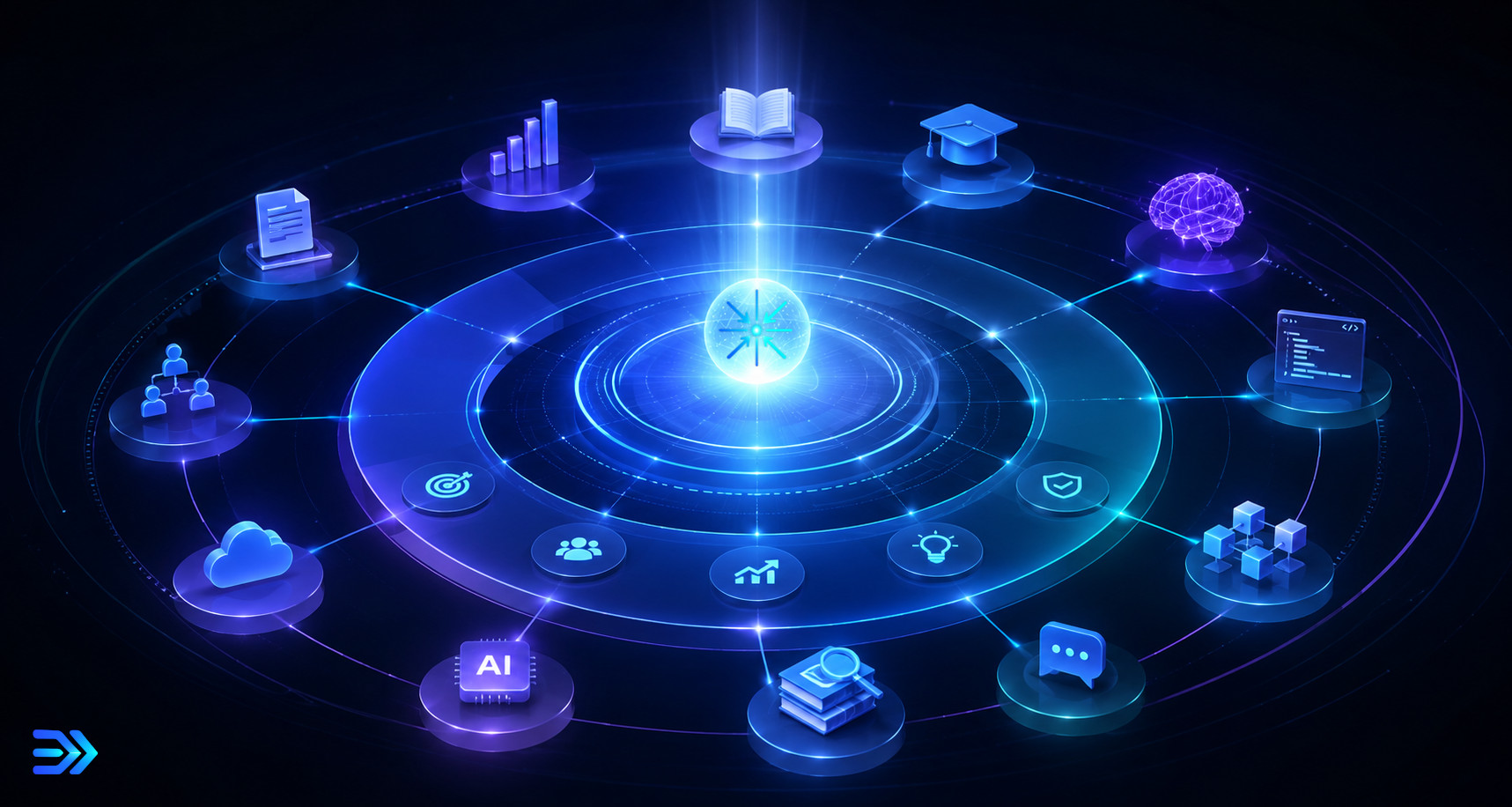 Environment Design
Environment Design Starts With Purpose
Purpose-built digital environments are not collections of websites, applications, or policies. They are intentionally designed around objectives, outcomes, and the people they serve.