

Table of contents
EduNet: Education Internet for the AI Era
For decades educational institutions faced a difficult choice.
Provide unrestricted internet access.
Or restrict access heavily.
Neither option has proven entirely satisfactory.
The open internet contains extraordinary educational opportunities.
It also contains distractions, misinformation, entertainment platforms, commercial services, and countless resources unrelated to learning.
At the same time, heavily restricted environments often prevent students from accessing valuable tools.
Education deserves a better option.
That option is EduNet.
The Internet Was Not Designed For Education
The internet was designed as a general-purpose network.
Its greatest strength is openness.
Anyone can publish.
Anyone can create.
Anyone can participate.
For society this has been enormously valuable.
For educational institutions it creates a challenge.
A learning environment must support learning.
The internet supports everything.
Those are not the same objective.
EduNet does not attempt to replace the internet.
It creates an educational environment within it.
The Modern Learning Environment
Today's students depend on digital resources.
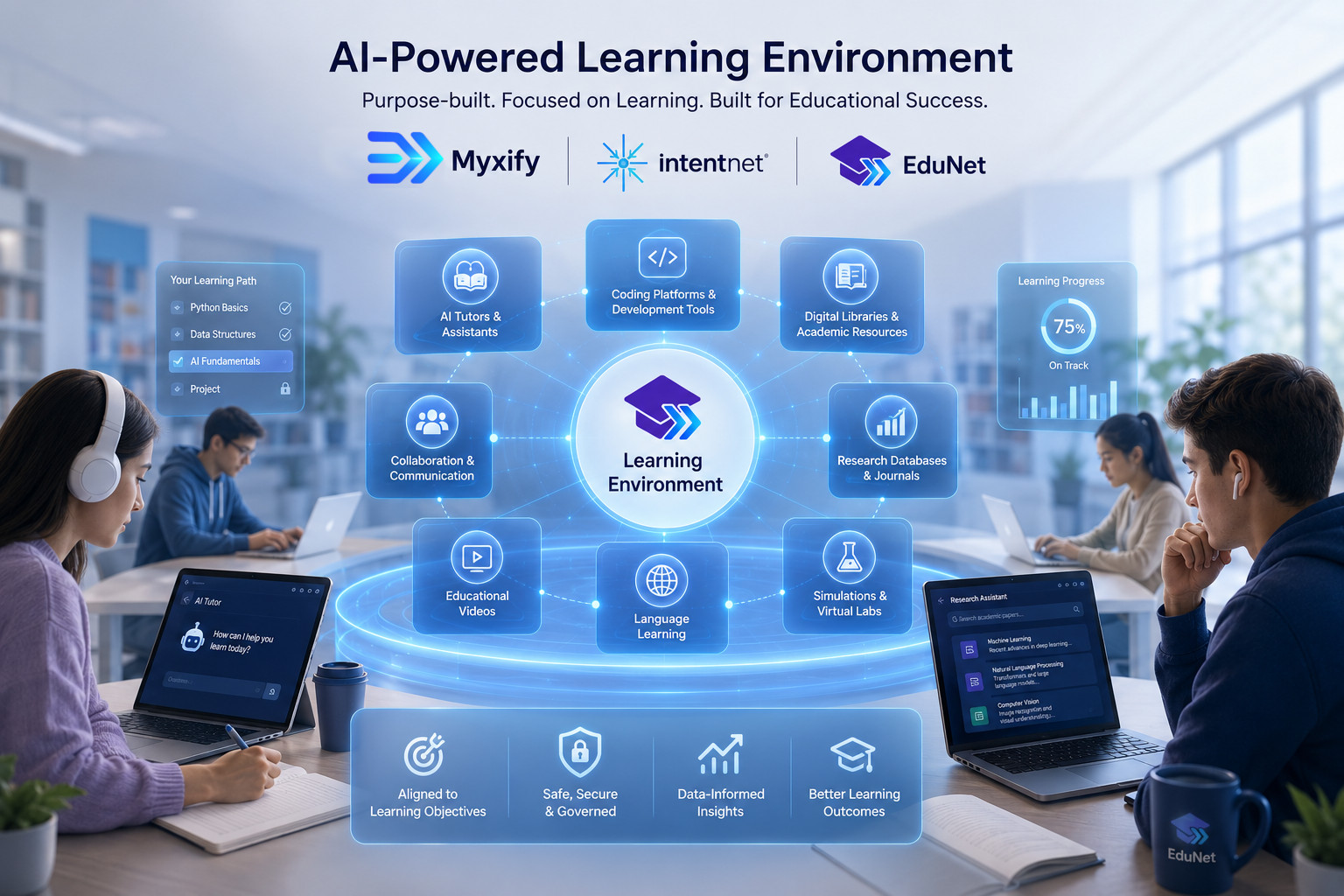
Examples include:
- AI tutors
- Educational AI assistants
- Coding platforms
- Digital libraries
- Research databases
- Learning management systems
- University resources
- Academic journals
- Educational video platforms
- Collaboration tools
These resources are no longer optional.
They are becoming part of the educational foundation itself.
The challenge is providing access to learning resources without turning every learning session into an exercise in distraction management.
Education Internet
EduNet introduces a simple concept.
Education Internet.
Instead of exposing students to the entire internet, institutions create environments centered around educational objectives.
The environment contains resources because they contribute to learning.
Not simply because they are reachable.
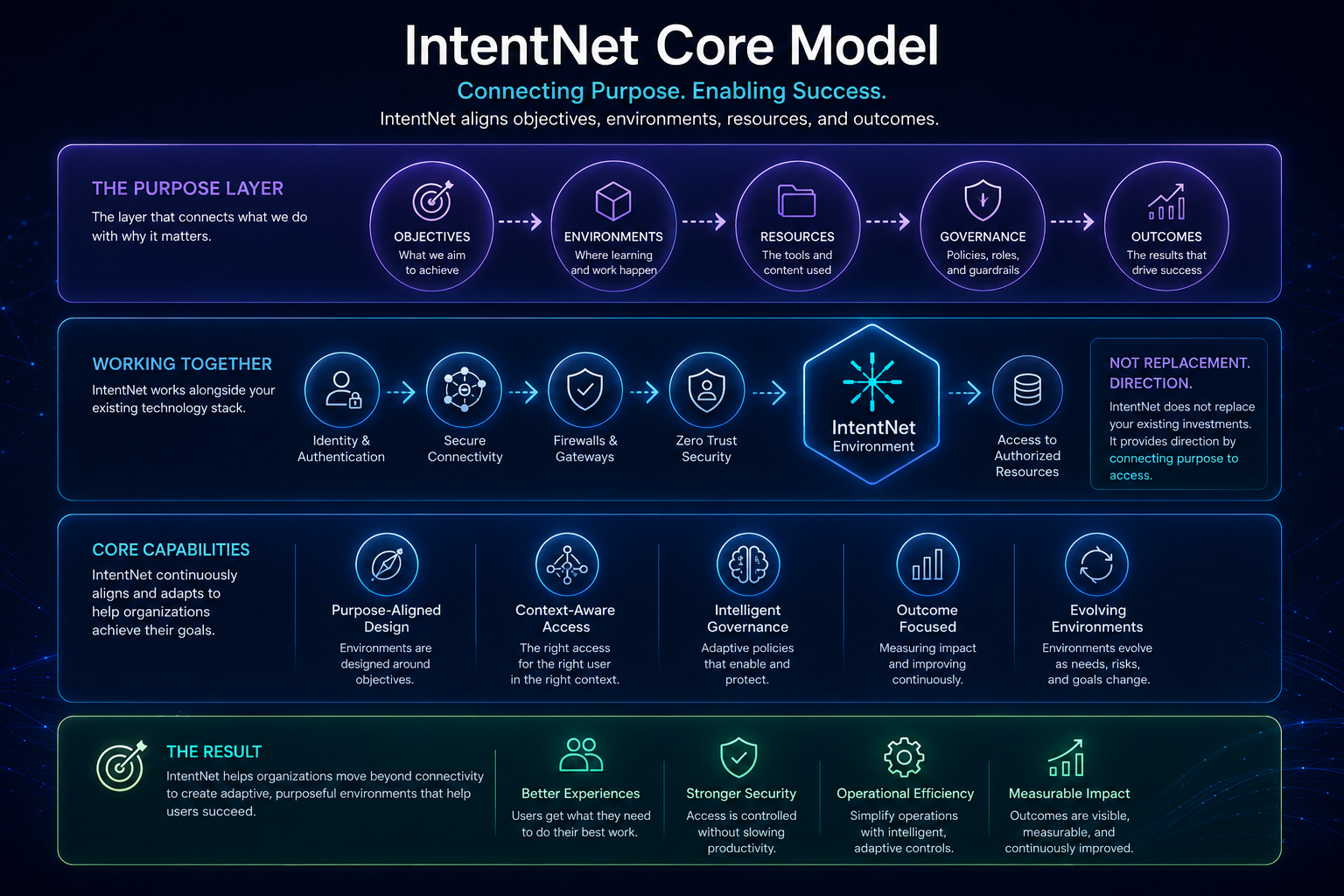
Learning
↓
Learning Environment
↓
Learning Resources
↓
Learning Outcomes
The focus shifts from websites to educational purpose.
Learning Resources Instead Of Block Lists
Many educational access models are built around restrictions.
Lists of blocked websites.
Lists of prohibited categories.
Lists of exceptions.
EduNet approaches the problem differently.
Instead of asking:
What should be blocked?
EduNet begins by asking:
What helps students learn?
That change in perspective is important.
The objective is not restriction.
The objective is learning.
AI Changes The Conversation
Artificial intelligence has accelerated educational change.
Students increasingly use:
- AI tutors
- Writing assistants
- Coding assistants
- Research assistants
- Language learning systems
Some institutions respond by attempting to block AI entirely.
Others allow unrestricted use.
Both approaches create challenges.
EduNet allows institutions to define which AI resources belong inside their educational environment and how they should be used.
The conversation becomes educational rather than purely technical.
Students Discover New Resources
No educational environment can predict every future learning resource.
Students often discover valuable tools before institutions do.
This creates an important challenge.
How should environments evolve?
EduNet addresses this through Guided Access.
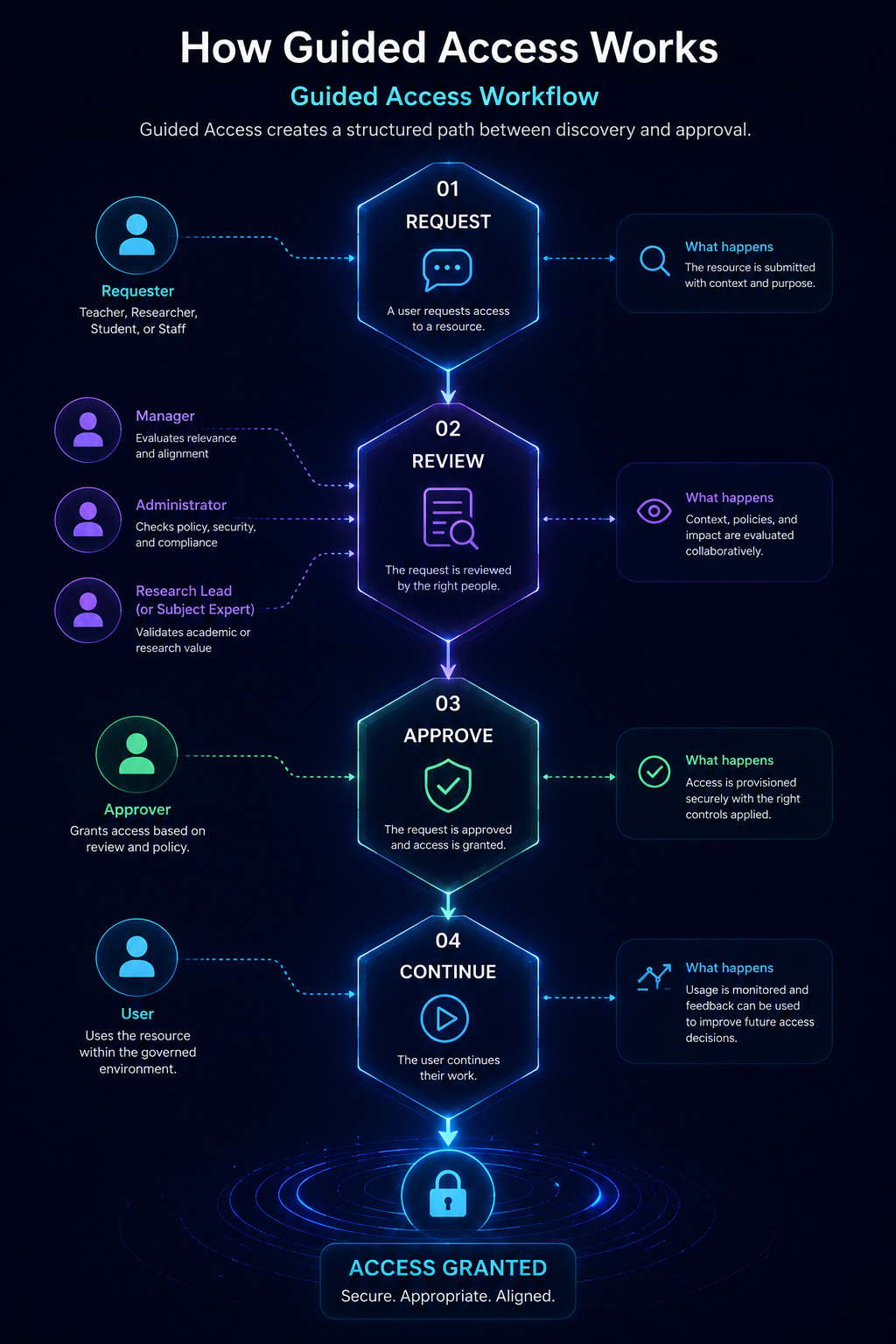
Request
↓
Review
↓
Approve
↓
Continue Learning
Teachers.
Administrators.
Parents.
Educational leaders.
All can participate in the decision process.
The environment remains adaptable without losing direction.
Consistency Matters
One of the most overlooked aspects of educational technology is consistency.
Students benefit when learning environments behave predictably.
Teachers benefit when educational resources are reliable.
Institutions benefit when governance remains understandable.
EduNet creates consistency by aligning resources with educational objectives.
Students spend less time navigating complexity and more time learning.
More Than Filtering
At first glance EduNet may resemble a filtering system.
It is not.
Filtering focuses on destinations.
EduNet focuses on environments.
Filtering asks:
Should this site be blocked?
EduNet asks:
Does this resource support learning?
That distinction changes how educational environments are designed.
Why EduNet Matters
The future of education will be increasingly digital.
Students will learn through AI.
Research will become more connected.
Learning resources will continue expanding.
Educational institutions need a model that supports these changes without abandoning educational objectives.
EduNet was created for that purpose.
The One-Sentence Test
If a student needs AI tutors, coding platforms, research resources, educational video, academic databases, and collaboration tools, but does not need the entire internet, then EduNet may be the right model.
That is Education Internet.
Next: WorkNet
Education is only one example of a purpose-built environment. Next, explore how the same foundation applies to modern organizations through WorkNet.
WorkNet
WorkNet: Work Internet for Modern Teams
Modern organizations depend on SaaS platforms, cloud services, AI assistants, contractors, and distributed teams. WorkNet creates environments designed around productive work rather than unrestricted internet access.

AI Governance Belongs Inside the Environment
Artificial intelligence has become one of the fastest-adopted technologies in modern history.
Within just a few years, AI systems moved from research laboratories into classrooms, offices, development environments, customer support operations, research institutions, and executive workflows. Employees use AI assistants to draft reports, analyze data, write software, summarize information, and automate routine tasks. Students increasingly rely on AI tutors, writing assistants, coding companions, and personalized learning tools.
For most organizations, the question is no longer whether AI will be used.
The question is how AI can be adopted responsibly while preserving organizational objectives, governance requirements, privacy expectations, and operational integrity.
That challenge has given rise to an entirely new discipline: AI governance.
Yet many organizations are approaching governance in ways that are unlikely to succeed.
They treat governance as a separate process rather than an integrated part of the environment where AI is actually used.
We believe the most effective AI governance emerges when governance is embedded directly into the environments where people learn, work, research, and collaborate.
AI governance is most effective when it becomes part of everyday operations rather than a separate compliance exercise.
The First Wave Of AI Governance
When organizations first encountered generative AI, many responded with uncertainty.
The pace of change was extraordinary.
New models appeared every few months.
New AI applications emerged every week.
Employees often discovered new tools long before formal governance processes could evaluate them.
Faced with this uncertainty, organizations typically adopted one of two approaches.
The first approach was prohibition.
Block AI systems.
Restrict access.
Delay adoption until policies could be developed.
The second approach was unrestricted experimentation.
Allow employees to choose whichever tools they preferred and trust individual judgment to manage the associated risks.
Neither approach proved sustainable.
Excessive restriction limited innovation and often encouraged employees to find workarounds. Unrestricted adoption created concerns about data protection, compliance, intellectual property, consistency, and accountability.
Organizations quickly discovered that AI governance required a more nuanced approach.
Policies Alone Do Not Create Governance
Many governance initiatives begin with documentation.
Organizations write policies.
Create guidelines.
Define acceptable use requirements.
Establish approval processes.
These efforts are valuable.
Policies provide direction.
They establish expectations.
They clarify responsibilities.
However, policies alone rarely determine day-to-day behavior.
Eventually employees need practical answers to practical questions.
- Which AI tools are approved?
- Which models can process sensitive information?
- Which workflows are recommended?
- Which use cases require additional review?
- How should new tools be evaluated?
- Who approves exceptions?
These decisions occur inside operational environments.
Governance therefore becomes most effective when those environments themselves communicate and enforce governance principles.
Governance Must Become Operational
Successful governance is not merely documented.
It is operationalized.
People should not need to consult a lengthy policy document every time they encounter a new AI capability.
Instead, governance should be reflected directly in the environment they use every day.
The environment should clearly indicate:
- Approved AI resources
- Available workflows
- Permitted use cases
- Review processes
- Escalation paths
- Responsible usage expectations
When governance becomes part of the environment, compliance becomes easier because responsible behavior becomes the default behavior.
This principle has been widely adopted in cybersecurity, safety engineering, and organizational design. AI governance is increasingly following the same path.
Different Objectives Require Different AI Environments
One of the most common governance mistakes is assuming that all AI use cases should be governed in the same way.
In reality, governance requirements differ significantly depending on the environment.
A university has different objectives than a software company.
A research institution has different objectives than a public-sector agency.
A healthcare organization operates under different constraints than a marketing team.
As a result, the governance model should reflect the purpose of the environment.
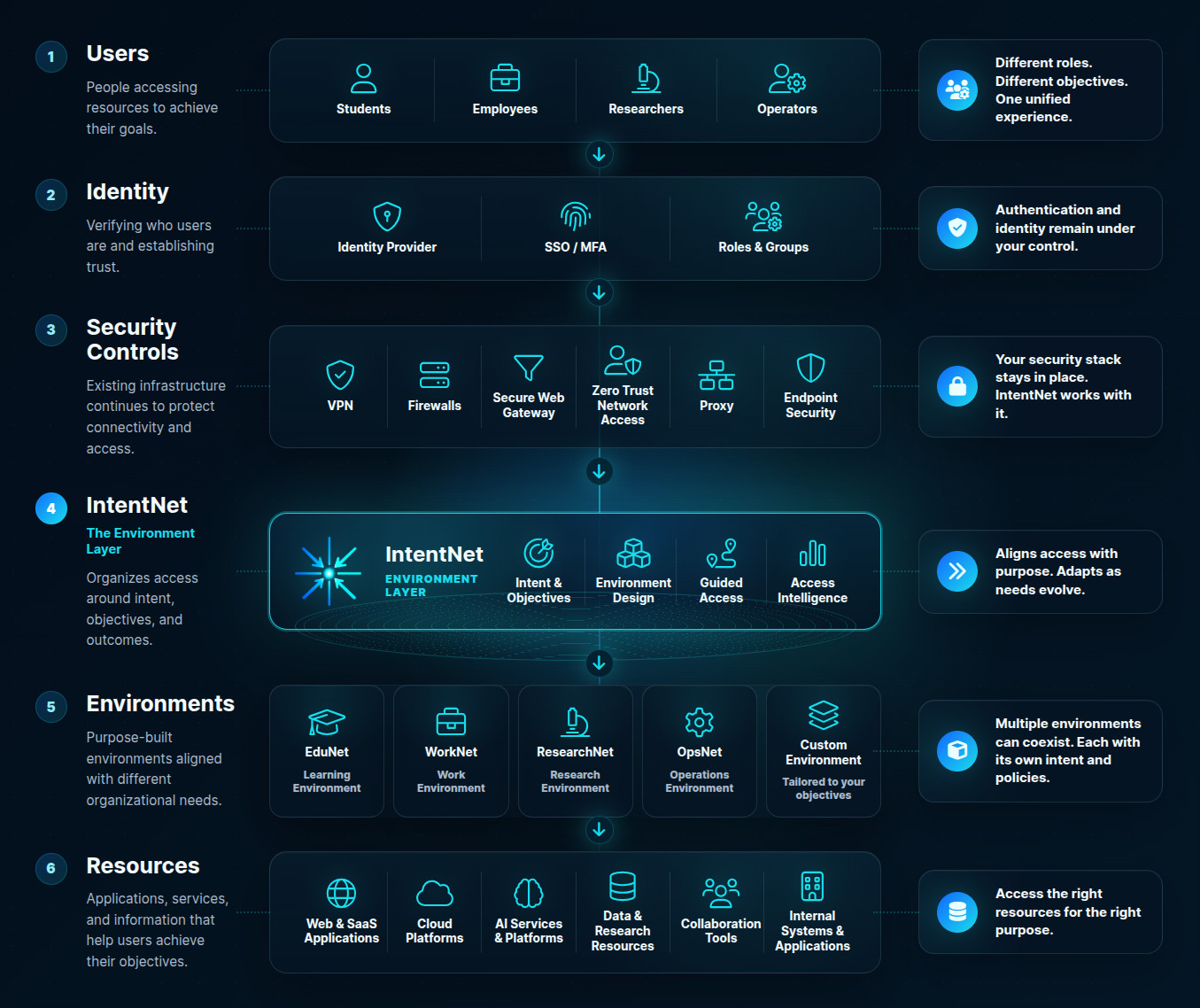
Learning Environment
→ Educational AI
Research Environment
→ Discovery AI
Work Environment
→ Productivity AI
Operational Environment
→ Process AI
Purpose provides context.
Context enables better governance decisions.
EduNet And Educational AI Governance
Educational institutions face a unique challenge.
AI is rapidly becoming part of the learning process itself.
Students use AI for tutoring, coding assistance, language learning, writing support, research guidance, and problem-solving.
Attempting to eliminate AI from education entirely is becoming increasingly unrealistic.
The more meaningful question is how AI should participate in learning.
Educational leaders must consider issues such as academic integrity, skill development, assessment methods, transparency, and responsible AI use.
EduNet allows institutions to define learning environments that include approved educational AI resources while preserving institutional governance.
Students gain access to valuable tools.
Institutions maintain oversight.
The objective remains learning.
WorkNet And Enterprise AI Governance
Organizations face a different set of challenges.
Employees frequently discover and adopt AI tools before governance teams have completed formal evaluations.
This creates several familiar risks.
- Shadow AI
- Data leakage concerns
- Regulatory uncertainty
- Inconsistent workflows
- Unapproved automation
- Fragmented adoption patterns
Many organizations attempt to address these risks through restrictions alone.
However, employees often adopt AI because it helps them work more effectively.
A governance model that ignores this reality is unlikely to succeed.
WorkNet addresses this challenge by creating environments where approved AI capabilities, governance controls, and productivity objectives coexist.
The goal is not to stop innovation.
The goal is to guide it.
Governance Requires A Process For Change
One of the defining characteristics of AI is the speed at which it evolves.
New models appear continuously.
New capabilities emerge unexpectedly.
New vendors enter the market.
No organization can realistically pre-approve every future AI system.
This is why governance must include a mechanism for controlled evolution.
IntentNet approaches this challenge through Guided Access.
Rather than forcing organizations into a binary choice between unrestricted adoption and permanent restriction, Guided Access creates a structured process for evaluating emerging tools.
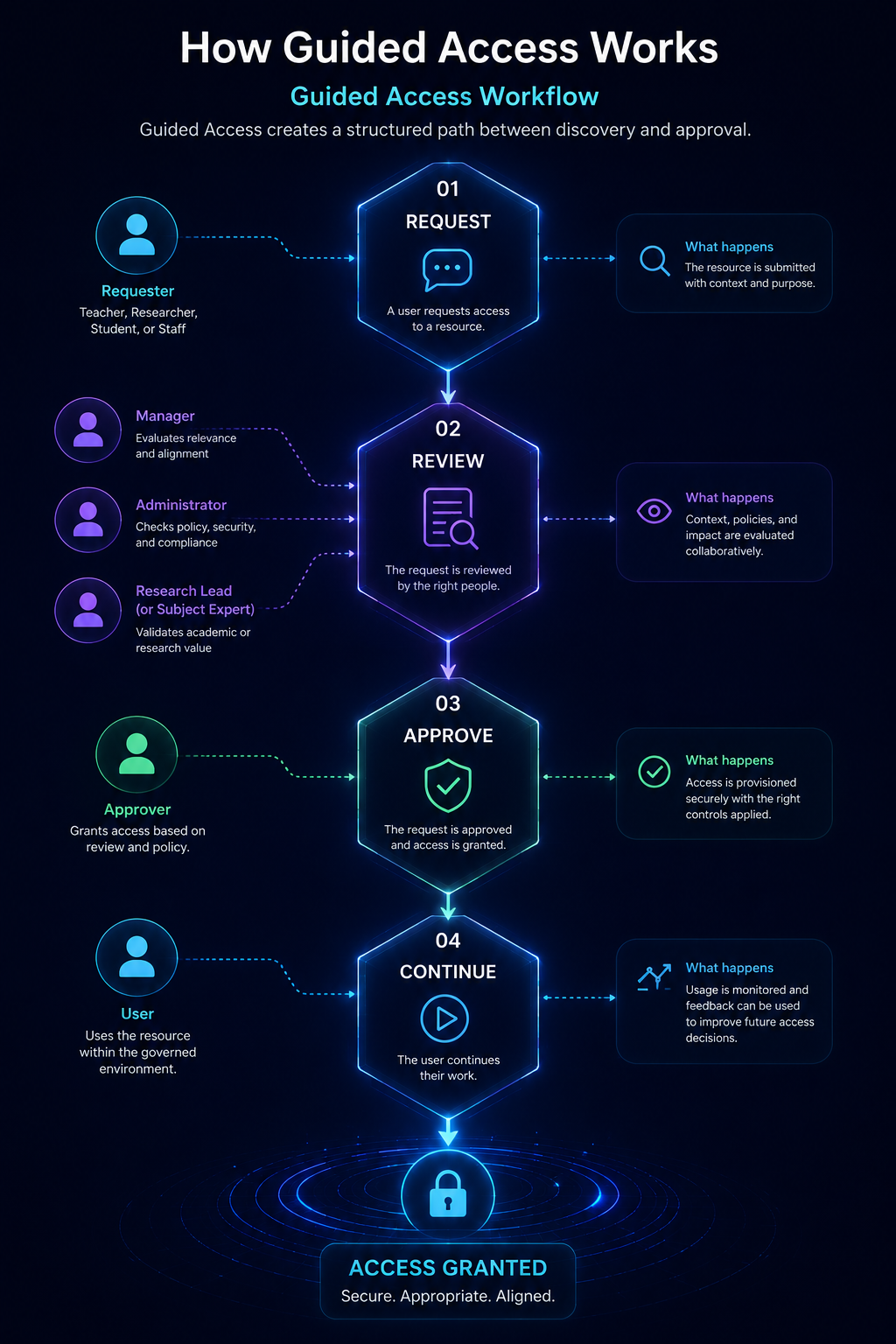
Request
↓
Review
↓
Approve
↓
Continue
This allows organizations to adapt without sacrificing accountability.
Governance Requires Learning
Strong governance is not static.
It improves over time.
Organizations learn from adoption patterns, requests, emerging technologies, operational outcomes, and user needs.
This is where Access Intelligence becomes particularly valuable.
Organizations should understand:
- Which AI tools create value
- Which resources are repeatedly requested
- Which policies create friction
- Which governance decisions require review
- Which capabilities are becoming strategically important
The purpose of this visibility is understanding.
Not surveillance.
Governance improves when organizations learn from real-world usage rather than relying solely on assumptions.
The Future Of AI Governance
Much of the public conversation around AI governance focuses on controls.
Controls matter.
Policies matter.
Compliance matters.
However, governance ultimately exists to enable responsible capability.
Organizations that succeed with AI will not be those that prohibit everything.
Nor will they be those that permit everything.
They will be organizations that create environments where innovation, accountability, transparency, and adaptability reinforce one another.
In other words, they will build environments where governance is not an obstacle to progress.
It becomes part of how progress occurs.
The Simplest Explanation
AI governance works best when it is embedded directly into the environments where people learn, work, research, and collaborate.
Approved tools.
Clear processes.
Defined responsibilities.
Guided evolution.
Continuous learning.
Responsible adoption.
That is why AI governance belongs inside the environment.
Next: Beyond EduNet And WorkNet
Education and work are only the beginning. Explore how IntentNet can support research environments, AI ecosystems, public services, regulated industries, and entirely new categories of purpose-built digital environments.
AI Governance
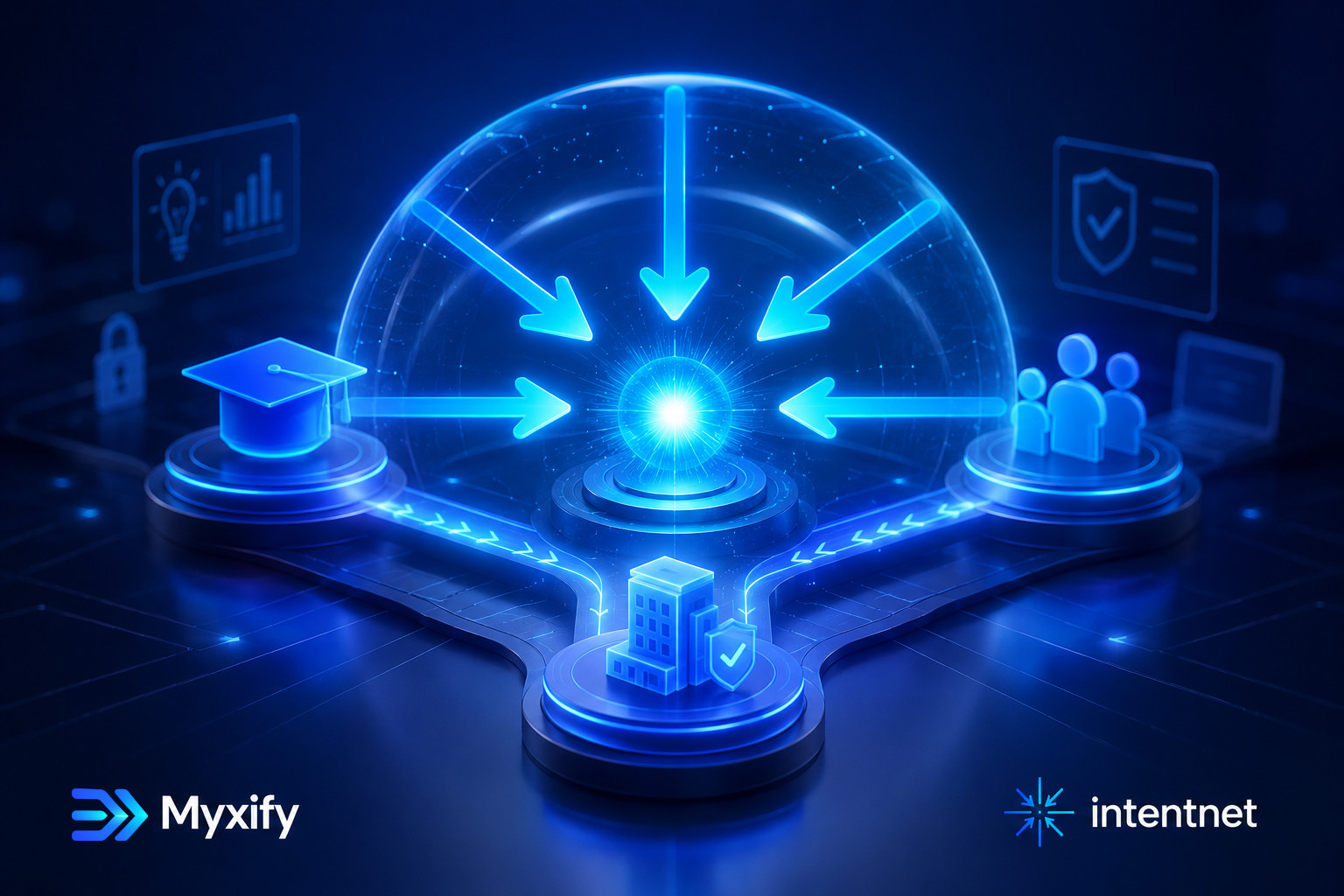
AI Governance Belongs Inside the Environment
Organizations increasingly recognize that AI governance is not a separate compliance exercise. The most effective governance emerges when approved tools, workflows, policies, and oversight are embedded directly into the environments where people work and learn.
AI Governance Belongs Inside the Environment
Artificial intelligence has become one of the fastest-adopted technologies in modern history.
Students use AI tutors.
Researchers use AI assistants.
Developers use AI coding tools.
Knowledge workers use AI to draft, summarize, analyze, and collaborate.
The question is no longer whether organizations will use AI.
The question is how they will use it responsibly.
That is where governance becomes important.
The False Choice
Many organizations initially respond to AI in one of two ways.
The first approach is prohibition.
Block everything.
Disallow AI entirely.
Prevent experimentation.
The second approach is unrestricted adoption.
Allow every tool.
Allow every model.
Allow every workflow.
Trust individuals to navigate the risks.
Neither approach scales well.
One limits innovation.
The other creates uncertainty.
The goal of AI governance is not stopping AI.
The goal is enabling AI responsibly.
Policies Alone Are Not Enough
Many organizations begin their governance journey by writing policies.
Policies are important.
They establish expectations.
They clarify responsibilities.
They define acceptable behavior.
But policies do not create operating environments.
Employees eventually need practical answers.
Questions such as:
- Which AI tools are approved?
- Which models can access company information?
- Which workflows are acceptable?
- How are new tools evaluated?
- Who approves exceptions?
These questions cannot be answered by policy documents alone.
They require operational environments.
Governance Must Be Operational
Effective governance works best when it becomes part of everyday activity.
People should not need to leave their environment to understand governance.
The environment itself should communicate:
- Which tools are approved
- Which resources are available
- Which workflows are supported
- Which requests require review
Governance becomes part of the experience.
Not a separate layer of bureaucracy.
AI Environments Are Different
One of the most common mistakes organizations make is assuming that all AI usage is the same.
It is not.
A school has different objectives than a research institution.
A research institution has different objectives than a software company.
A software company has different objectives than a government agency.
Different objectives require different environments.
Learning Environment
→ Educational AI
Research Environment
→ Discovery AI
Work Environment
→ Productivity AI
Operational Environment
→ Process AI
Governance should reflect purpose.
EduNet And AI Governance
Educational institutions face unique challenges.
Students increasingly rely on AI for:
- Learning support
- Writing assistance
- Coding help
- Research guidance
- Language learning
Attempting to eliminate AI from education is increasingly unrealistic.
The more practical challenge is determining how AI should participate in learning.
EduNet allows institutions to define educational AI environments aligned with their goals.
WorkNet And AI Governance
Organizations face a different challenge.
Employees often discover new AI tools before governance frameworks catch up.
This creates:
- Shadow AI
- Data exposure concerns
- Compliance questions
- Inconsistent workflows
- Fragmented adoption
WorkNet allows organizations to define approved AI environments while preserving flexibility.
Innovation continues.
Governance remains intact.
Guided Access Supports Innovation
One reason AI governance becomes difficult is the speed of change.
New tools appear constantly.
No organization can pre-approve every future system.
IntentNet addresses this through Guided Access.
Request
↓
Review
↓
Approve
↓
Continue
This allows experimentation without abandoning governance.
Governance Requires Learning
Good governance evolves.
Organizations learn from:
- Adoption patterns
- Resource requests
- Emerging tools
- User behavior
- Operational outcomes
This is where Access Intelligence becomes valuable.
Governance improves when organizations understand what is happening inside their environments.
The objective is insight.
Not surveillance.
The Future Of AI Governance
Many governance discussions focus on controls.
Controls matter.
But governance is ultimately about enabling responsible capability.
Organizations that succeed with AI will not be the ones that block everything.
Nor will they be the ones that allow everything.
They will be the organizations that create environments where innovation and accountability coexist.
The Simplest Explanation
AI governance works best when it is embedded inside the environment itself.
Approved tools.
Clear workflows.
Defined responsibilities.
Guided evolution.
Continuous learning.
That is why AI governance belongs inside the environment.
Final Article: The Future Of Purpose-Built Internet
We've explored IntentNet, EduNet, WorkNet, governance, intelligence, and environments. The final article looks ahead at where purpose-built digital environments may lead next.
Future Environments
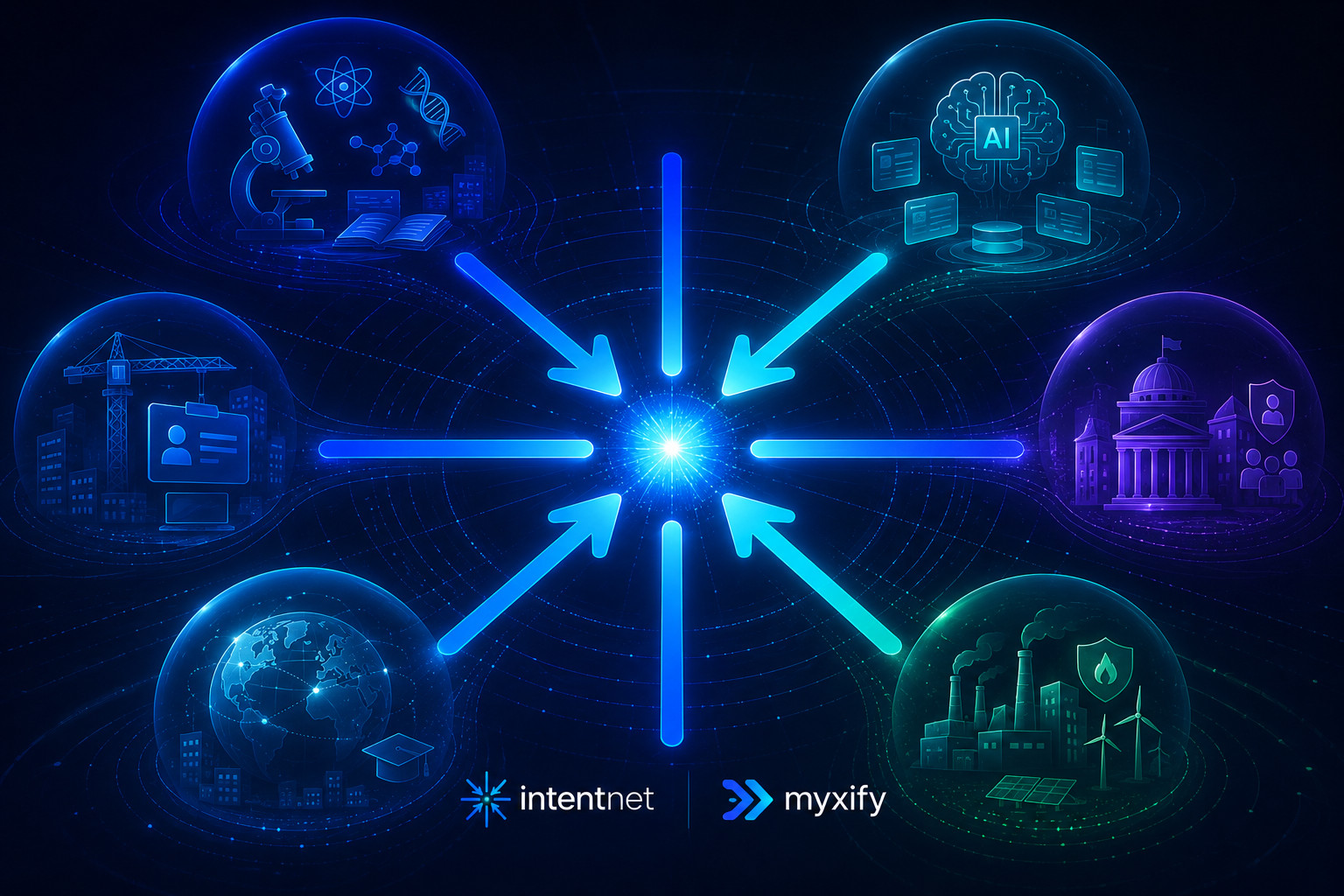
Research and Custom Environments Beyond EduNet and WorkNet
EduNet and WorkNet are not the destination. They are the first demonstrations of a broader idea: digital environments designed around purpose rather than generic connectivity.
Research and Custom Environments Beyond EduNet and WorkNet
When people first encounter IntentNet, they often focus on its most visible implementations.
EduNet.
WorkNet.
That reaction is understandable.
These environments are concrete, easy to visualize, and address challenges that many organizations already recognize. Educational institutions understand the need for learning environments. Businesses understand the need for productive work environments.
Yet focusing exclusively on EduNet and WorkNet risks missing the larger idea.
IntentNet was never conceived as a platform for two products.
It was designed as a foundation for creating digital environments aligned with purpose.
EduNet and WorkNet demonstrate the concept.
They do not define its limits.
IntentNet is not a collection of environments. It is a framework for creating environments wherever digital access influences outcomes.
The Larger Opportunity
Most digital environments today evolved organically.
Organizations adopted technologies as needs emerged.
New applications were added.
New platforms were integrated.
New services became available.
Over time, digital ecosystems became increasingly complex.
Yet despite this complexity, a surprisingly simple question often remains unanswered.
What is this environment actually designed to achieve?
IntentNet begins by answering that question.
The objective becomes the starting point.
The environment becomes a deliberate design choice rather than an accidental collection of technologies.
Once that principle is established, entirely new categories of environments become possible.
Research Environments
Research represents one of the most natural applications of IntentNet.
Modern researchers depend on a wide variety of digital resources.
These may include:
- Academic journals
- Scientific databases
- Research repositories
- Computational platforms
- AI-assisted discovery tools
- Specialized software
- Collaboration environments
- Institutional resources
Research environments must balance openness and governance.
Researchers need the freedom to explore new ideas, discover emerging resources, and collaborate across institutional boundaries.
At the same time, institutions must manage compliance requirements, licensing restrictions, funding obligations, security expectations, and operational oversight.
IntentNet provides a framework for balancing these competing demands.
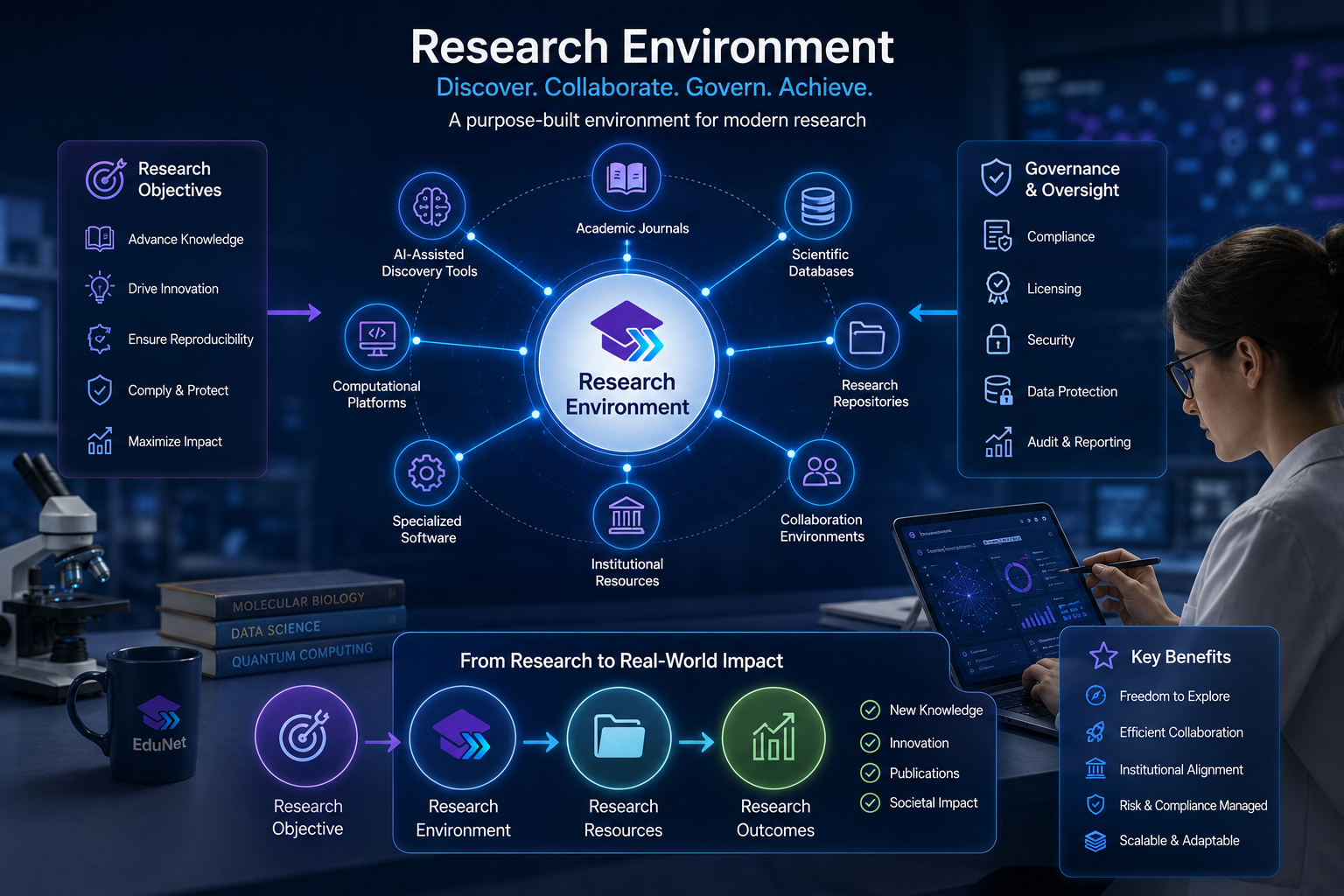
Research Objective
↓
Research Environment
↓
Research Resources
↓
Research Outcomes
The environment evolves around discovery while remaining aligned with institutional goals.
AI Ecosystems
Artificial intelligence presents another compelling opportunity.
Many organizations are currently adopting AI through a fragmented process.
Teams experiment independently.
Employees discover tools on their own.
Departments develop separate governance practices.
Technology portfolios expand rapidly.
The result is often a collection of disconnected AI initiatives.
IntentNet introduces a different possibility.
Rather than managing individual AI tools, organizations can design environments specifically intended to support responsible AI adoption.
Such environments may include:
- Approved models
- Approved assistants
- Data governance controls
- Experimentation zones
- Review workflows
- Access policies
- Organizational guidance
The focus shifts from individual technologies to the ecosystem as a whole.
Project And Contractor Environments
Modern organizations increasingly rely on external contributors.
Consultants.
Contractors.
Research partners.
Implementation teams.
Specialized vendors.
The challenge is rarely whether access should exist.
The challenge is ensuring that access remains proportional to purpose.
External contributors often require access to specific resources for a specific period of time.
They rarely require unrestricted access to every organizational system.
IntentNet enables environments aligned with projects, programs, contracts, and collaborative initiatives.
Access becomes intentional.
Not excessive.
Public Service Environments
Governments and public-sector institutions face a unique combination of responsibilities.
They must provide services at scale.
Operate transparently.
Maintain accountability.
Comply with regulations.
Serve diverse populations.
And increasingly deliver those services through digital platforms.
In many cases, public-sector organizations require environments that balance accessibility, governance, privacy, operational efficiency, and public trust.
IntentNet offers a framework for organizing digital environments around public objectives rather than purely technical considerations.
This may become increasingly important as digital public infrastructure continues to expand.
Industry-Specific Environments
Many industries operate under unique constraints.
Healthcare organizations must balance patient care, privacy, compliance, and innovation.
Financial institutions must manage risk, regulation, security, and operational efficiency.
Energy providers must protect critical infrastructure while supporting increasingly digital operations.
Manufacturing organizations rely on specialized systems, supply chains, and industrial platforms.
These environments often require governance models that differ substantially from those found in education or enterprise collaboration.
IntentNet allows environments to be designed around the specific objectives and constraints of each sector.
The underlying principles remain consistent.
The implementation adapts to the context.
Shared And National Environments
Some opportunities extend beyond individual organizations.
Educational networks.
Research communities.
Industry ecosystems.
Regional collaborations.
National initiatives.
These environments frequently involve multiple stakeholders operating under shared objectives.
IntentNet provides a framework for coordinating resources, governance, access models, and operational objectives across organizational boundaries.
Such environments may become increasingly important as societies continue investing in digital infrastructure, research collaboration, workforce development, and artificial intelligence.
Every Objective Can Become An Environment
One useful way to understand IntentNet is through a simple thought experiment.
Start with an objective.
Then ask:
What kind of environment would best support that objective?
The answer may lead to:
- Learning environments
- Work environments
- Research environments
- Healthcare environments
- Innovation environments
- Public-service environments
- AI ecosystems
- Operational environments
- Industry-specific platforms
Or categories that have not yet been imagined.
The objective changes.
The design philosophy remains remarkably consistent.
Purpose.
Environment.
Resources.
Outcomes.
Beyond Products
EduNet and WorkNet are important because they make the concept tangible.
People can immediately understand the value of environments designed around learning or productive work.
Yet those environments represent only the beginning.
The broader opportunity lies wherever digital access influences outcomes.
As organizations become increasingly digital, more leaders are beginning to recognize that environments deserve intentional design.
Not every organization requires the same environment.
Not every objective requires the same resources.
And not every challenge should be solved using the same model.
That realization opens the door to an entirely new category of digital infrastructure.
Looking Ahead
The internet connected people to information.
The next generation of digital infrastructure may increasingly focus on connecting people to purpose.
If that happens, the most important question will no longer be:
What resources are available?
Instead it may become:
What environment best supports the outcome we are trying to achieve?
EduNet answers that question for learning.
WorkNet answers that question for productive work.
The next answers have yet to be discovered.
The Simplest Explanation
EduNet and WorkNet demonstrate what purpose-built digital environments can look like.
IntentNet asks a much larger question.
What becomes possible when digital environments are intentionally designed around objectives rather than generic connectivity?
The answer extends far beyond education and work.
And we are only beginning to explore it.
Final Article: Let's Build What's Next
The future of purpose-built digital environments will not be created by technology alone. It will be shaped by organizations, educators, researchers, innovators, and leaders willing to rethink how digital environments should work.
Founder Letter
Let's Build What's Next With Myxify
Technology matters. Infrastructure matters. Products matter. But every meaningful project begins with a question: what are you trying to achieve?


Let's Build What's Next With Myxify
By Paymon Parsi, CEO of Myxify
Over the last several articles, we explored an idea.
An idea that began with a simple observation.
The internet solved connectivity.
The next challenge is purpose.
We discussed IntentNet.
We explored EduNet.
We explored WorkNet.
We talked about AI governance, Guided Access, Access Intelligence, Policy Integrity, and purpose-built environments.
But none of those things are the destination.
They are only the beginning.
Technology Is Rarely The Starting Point
One lesson has remained consistent throughout my career.
Organizations rarely begin with technology.
They begin with challenges.
A school wants to improve learning outcomes.
A company wants to improve productivity.
A research institution wants to accelerate discovery.
A public organization wants to deliver better services.
A team wants to embrace AI responsibly.
Technology becomes valuable only when it helps solve those challenges.
That is why Myxify always starts with the objective.
Not the product.
Not the platform.
Not the architecture.
The objective.
Sometimes The Answer Is EduNet
Many educational institutions face a familiar problem.
Students need digital resources.
Teachers need consistency.
Administrators need governance.
Parents need trust.
EduNet was created to help solve that challenge.

Sometimes The Answer Is WorkNet
Organizations face a different reality.
Distributed teams.
Contractors.
Cloud platforms.
AI systems.
Operational complexity.
WorkNet was created to help organizations build productive digital work environments aligned with their goals.

Sometimes The Answer Does Not Exist Yet
This is the part that excites us most.
Some organizations come to us with challenges that do not fit neatly into existing categories.
Research initiatives.
AI ecosystems.
National education programs.
Public service environments.
Industry-specific platforms.
Regulated operational environments.
These conversations often lead somewhere unexpected.
Not toward a product.
Toward a new environment.
And sometimes toward something entirely new.
Why We Built IntentNet
IntentNet was never designed to become a single application.
Or a single platform.
Or even a single category.
It was designed to answer a question.
What happens when digital environments are designed around purpose instead of generic connectivity?
We believe that question will become increasingly important over the next decade.
As AI expands.
As work changes.
As learning evolves.
As organizations become more digital.
Purpose will matter more.
Not less.
Start Small
One of the biggest misconceptions about innovation is that it requires massive projects.
Most successful transformations begin modestly.
One classroom.
One department.
One research group.
One team.
One pilot.
One objective.
The goal is not to change everything.
The goal is to learn.
Then improve.
Then expand.
The Conversation We'd Like To Have
If you contact Myxify, I hope the first conversation is not about technology.
I hope it is about your objective.
What are you trying to accomplish?
What challenges are slowing progress?
What outcomes matter most?
What kind of environment would help people succeed?
Those questions are far more important than product specifications.
The technology conversation can come later.
An Invitation
Whether you represent a school, a university, a company, a government organization, a research institution, or a new idea that does not yet fit an existing category, I invite you to start a conversation.
Not about products.
About possibilities.
Because the future will not be defined by access alone.
It will be defined by what people are able to achieve once they have it.
And that is the future we are building at Myxify.
Let's Build What's Next
If any part of this journey resonates with you, reach out.
Tell us about your challenge.
Tell us about your objective.
Tell us what you're trying to build.
We'll start there.
Because every meaningful environment begins with purpose.
And every meaningful outcome begins with a conversation.
Start The Conversation
Explore EduNet, WorkNet, IntentNet, or discuss a custom environment with the Myxify team.
READING JOURNEY
Continue Reading
WorkNet: Work Internet for Modern Teams
Continue ReadingRELATED ARTICLES
Keep exploring the knowledge hub.
 Guided Access
Guided Access: Guide Instead of Block
For decades digital access systems relied on two answers: yes or no. IntentNet introduces a third answer: not yet. Guided Access helps environments evolve without becoming unrestricted.
WorkNetWorkNet: Work Internet for Modern Teams
Modern organizations depend on SaaS platforms, cloud services, AI assistants, contractors, and distributed teams. WorkNet creates environments designed around productive work rather than unrestricted internet access.
 Environment Design
Environment Design Starts With Purpose
Purpose-built digital environments are not collections of websites, applications, or policies. They are intentionally designed around objectives, outcomes, and the people they serve.